TRIGA Mark II Research Reactor of the Jožef Stefan Institute
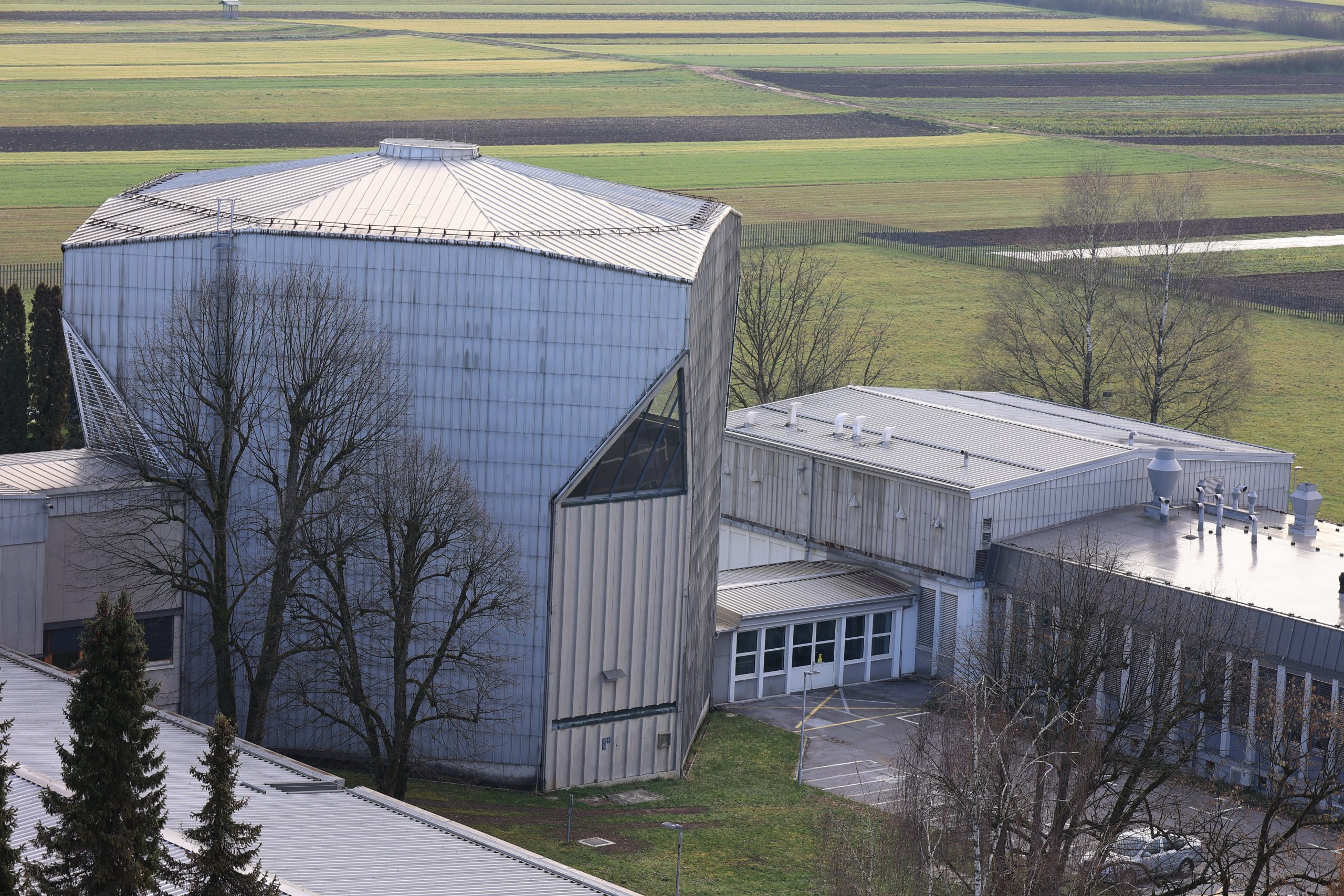
The TRIGA Mark II research reactor, operating within the Reactor Infrastructure Centre (RIC) at the Jožef Stefan Institute, represents the central nuclear research infrastructure in Slovenia.
Technical description
Due to its design, reliability, and long-term safe operation, it is considered one of the most recognizable research reactors of its kind in the international environment. Read more
Achievements and impact
Since its inauguration on 31 May 1966, the reactor has continuously supported research work, education, and the development of nuclear technology and safety culture. It plays an important role in the development of nuclear technology and safety culture in Slovenia. From the very beginning, it has represented a central point around which modern technology has developed. More information
Safety and operation
The TRIGA reactor operates in accordance with the highest national and international nuclear safety standards. It is intended for a wide range of applications: neutron and gamma radiation research, education, training, materials analysis, and the development of new technologies. Read more
TRIGA Mark II Research Reactor of the Jožef Stefan Institute
The TRIGA Mark II research reactor, operating within the Reactor Infrastructure Centre (RIC) at the Jožef Stefan Institute, represents the central nuclear research infrastructure in Slovenia.
Technical description
Due to its design, reliability, and long-term safe operation, it is considered one of the most recognizable research reactors of its kind in the international environment. Read more
Achievements and impact
Since its inauguration on 31 May 1966, the reactor has continuously supported research work, education, and the development of nuclear technology and safety culture. It plays an important role in the development of nuclear technology and safety culture in Slovenia. From the very beginning, it has represented a central point around which modern technology has developed. More information
Safety and operation
The TRIGA reactor operates in accordance with the highest national and international nuclear safety standards. It is intended for a wide range of applications: neutron and gamma radiation research, education, training, materials analysis, and the development of new technologies. Read more
Activities
Research
The research reactor represents an important piece of research infrastructure for studies in a variety of fields. It also enables irradiation of materials and biological samples, the development of computer models, as well as new experimental methods and safety analyses.
Research results have been published in more than 300 scientific articles and 600 conference papers, and the reactor has also made an important contribution to the education of young researchers. We also actively participate in national and international projects.
More information: triga@ijs.si.
The reactor is used for research in the fields of:
- reactor physics;
- materials and radiation damage;
- analytical chemistry (especially neutron activation analysis);
- solid-state physics and neutron spectrometry;
- dosimetry and nuclear safety.
The reactor enables:
- irradiation of materials, components and biological samples;
- development and validation of computer models;
- development of new experimental methods and safety analyses;
- optimisation of reactor operation and utilization.
Research results have been published in more than 300 scientific articles and 600 conference papers. The reactor has been used in more than 20 doctoral theses, 30 master’s theses, and over 100 university diploma theses. The reactor also participates in international projects, including research within CERN.
The reactor is routinely used by the following research groups:
- PO-0531 Biological and geo-chemical cycles (Dr. Milena Horvat)
- PO-0532 Radiochemistry and radioecology (Dr. Ljudmila Benedik)
- PO-014 Experimental physics of elementary particles (Dr. Marko Mikuž)
Main national research projects:
- neutron activation analysis;
- environmental studies: determination of heavy metals using activation analysis;
- testing of radiation-resistant LEDs and LED luminaire components in cooperation with Slovenian industry (DITO d.o.o.);
- development of radiochemical methods;
- activation of concrete and other components of the reactor’s biological shielding for decommissioning planning;
- optimisation of reactor operation and utilisation;
- determination and measurement of reactor safety parameters;
- development of new methods for safety analyses;
- radiation damage and reactor materials;
- development of neutron dosimetry;
- new experimental methods for studying reactor properties;
- use of irradiated fuel elements as a strong gamma radiation source;
- irradiation of plant seeds for agricultural research.
Main international research projects:
- radiation damage in semiconductor neutron detectors for particle accelerators, ATLAS Collaboration, CERN;
- irradiation of high-temperature superconductors (magnesium boride), Ruđer Bošković Institute, Zagreb.
Articles – TRIGA Mark II Ljubljana
- 2026
- 2025
- 2024
- 2023
- 2022
- 2021
- 2020
- 2019
- 2018
- 2017
- 2015
- 2014
- 2013
- 2012
- 2011
- 2010
- 2009
- 2008
- 2007
- 2006
- 2005
- 2004
- 2003
- 2002
- 2001
- 2000
- 1999
- 1998
- 1997
- 1996
- 1995
- 1994
- 1993
- 1992
- 1991
- 1990
- 1988
- 1986
- 1984
- 1982
- 1980
- 1978
- 1976
- 1974
- 1972
- 1971
- 1970
- 1966
| Ambrožič Klemen, Carcreff Hubert, Radulović Vladimir, Fourmentel Damien, Destouches Christophe, Thiollay Nicolas, Snoj Luka | Nuclear heating at the JSI TRIGA reactor : measurements and simulations |
| Schimmelmann, Arndt, Jazbec, Anže, Krainc, Bor, Potočnik, Doris, Ogrinc, Nives | Radiolytic CH4 and CO2 from irradiated organic compounds |
| Jakub Piotr Włodarczyk, Barbara Bieńkowska, Ewa Łaszyńska, Domen Govekar, Domen Kotnik, Igor Lengar, Xavier Litaudon, Julijan Peric, Vladimir Radulovic, Luka Snoj | Neutron measurements at the KATANA water-activation loop using the neutron activation method |
| Primož Lesjak, Aljaž Čufar, Domen Kotnik, Julijan Peric, Marco De Pietri and Luka Snoj | Simulation of water activation in the KATANA activation loop of the TRIGA reactor |
| Julijan Peric, Luka Snoj, Vladimir Radulović | Cherenkov reactor power meter: Development of an innovative and cost-effective technique for reactor power monitoring |
| Igor Mandić, Vladimir Cindro, Gregor Kramberger, Marko Mikuž, Marko Puklavec, C. Scharf et al. | Unusual annealing of charge collection efficiency of silicon strip detectors |
| Iskra Velkovska, Asma Aboulhorma, Jernej Debevec, Bojan Hiti, Gregor Kramberger, Igor Mandić, Marko Puklavec, Xuai Zhuang et al. | TCT-based monitoring of LGAD radiation hardness for ATLAS-HGTD production |
| Christoph Klein, Vladimir Cindro, Igor Mandić, Yuzhan Zhao et al. | Defect investigation in irradiated ATLAS18 ITk Strip Sensors using transient spectroscopy techniques |
| Ahmadov, F., Ahmadov, G., Mammadli, A., Sadygov, A., Sadygov, Z., Jazbec Anže, Ambrožič Klemen, Holik, M., Nuruyev, S., Okrimenko, O et al. | Study of the neutron radiation hardness of MAPD-3NK2 silicon photomultipliers |
| Snoj Luka, Ambrožič Klemen, Barbot Loic, Benedik Ljudmila, Bratkič Arne, Čapan Ivana, Reynard-Carette C., Cindro Vladimir, Čalić Dušan, Destouches Christophe, Geslot B., Haghighat Alireza, Henry Romain, Horvat Milena, Huseynov Elchin, Izzara Gregoire, Jaćimović Radojko, Jazbec Anže, Jenčič Igor, Jeraj Robert, Joyce Malcolm, Kotnik Domen, Kramberger Gregor, Lengar Igor, Malec Jan, Mandić Igor, Mascollino Valerio, Merljak Vid, Mikuž Marko, Noguere Gilles, Peric Julijan, Pungerčič Anže, Radulović Vladimir, Rupnik Sebastjan, Šmodiš Borut, Šlekovec Zdenka, Štrok Marko, Stančar Žiga, Švajger Ingrid, Thiollay N., Tišelj Iztok, Trkov Andrej, Žefran Bojan, Žerovnik Gašper, Žiber Ylenia, Goričanec Tanja | A half-century of nuclear research, education and training : Story of the JSI TRIGA reactor |
| Huseynov, Elchin, Huseynova, Efsane A., Jazbec, Anže | EPR spectroscopic characterization of neutron-irradiated nanocrystalline anatase particles |
| Julijan Peric, Domen Kotnik, Luka Snoj, Vladimir Radulović | Neutron emission from water activation: Experiments and modeling under fusion-relevant conditions at the KATANA facility |
| Julijan Peric, Domen Kotnik, Domen Govekar, Luka Snoj, Vladimir Radulović | Validating a simplified water-activation transport model using time-resolved reactor-pulse neutron measurements at KATANA |
| Jernej Debevec, M. Franks, Bojan Hiti, U. Kraemer, Gregor Kramberger, Igor Mandić, R. Marco-Hernández, D. J. L. Nobels, S. Powell, Jory Sonneveld et al. | Measurements of time resolution of the RD50-MPW2 DMAPS prototype using TCT and 90Sr |
| Luise Poley, Igor Mandić, Sally Seidel et al. | Current early breakdown in silicon strip sensors with radiation |
| E. Bach, Igor Mandić, Marko Mikuz, Yoshinobu Unno et al. | Analysis of the quality assurance results from the initial part of production of the ATLAS18 ITk strip sensors |
| M. Mikestikova, Igor Mandić, I. Zatočilová et al. | The study of gamma-radiation induced displacement damage in n-in-p silicon diodes |
| Šubercaze Alexandre, Radulović Vladimir, Philibert H., Ambrožič Klemen, Gregoire G., Tisseur David, Domergue C., Fausser C., Thiollay N. | Measurement of the 117mSn, 125mTe, 135mBa and 195mPt half-lives for reactor dosimetry application |
| Prašnikar Anže, Hočevar Brigita, Jazbec Anže, Ambrožič Klemen, Snoj Luka, Likozar Blaž | Catalytic methanol cracking to hydrogen and formaldehyde over heterogeneous catalysts by radiolysis: Sectoral industrial symbiosis by waste radiation utilisation |
| Šola Valentina, Mandić Igor, Ambrožič Klemen, Villarreal O. A. M., Ferrero Marco, Kramberger Gregor, Snoj Luka | Fluence profiling at JSI TRIGA reactor irradiation facility |
| Radulović Vladimir, Thiollay N., Carcreff Hubert, Pungerčič Anže, Ambrožič Klemen, Destouches Christophe, Trkov Andrej | Epithermal neutron activation dosimetry–(n,γ) reactions under boron-based filters |
| Malec Jan, Tišelj Iztok, Cizelj Leon, Pungerčič Anže, Goričanec Tanja, Snoj Luka | Advancing nuclear research and education in Slovenia and EU: from operating the TRIGA reactor to building a new generation facility |
| Huseynov, Elchin, Jazbec, Anže | Application of neutron transmutation technology to control the physical properties of nanoparticles at the atomic scale |
| Bratkič, Arne, Jazbec, Anže, Toplak, Nataša, Koren, Simon, Lojen, Sonja, Tinta, Tinkara, Kostanješek, Rok, Snoj, Luka | The colonization of an irradiated environment: The case of microbial biofilm in a nuclear reactor |
| Čerba, Š., Haščik, Jan, Lölley, J., Vrban, B., Radulović, Vladimir, Jazbec, Anže, Snoj, Luka, Sklenka, L., Miglierini, Marcel, Cifrus, S., Tormasi, A., Cagnazzo, Marcella, Bock, Helmuth, Villa, M. | Education methods of the European nuclear experimental educational platform |
| Domen Kotnik, Julijan Peric, Domen Govekar, Luka Snoj, Igor Lengar | KATANA – water activation facility at JSI TRIGA, Part I: Final design and activity calculations |
| Domen Kotnik, Julijan Peric, Domen Govekar, Luka Snoj, Igor Lengar | KATANA – water activation facility at JSI TRIGA, Part II: First experiments |
| Igor Mandić, Vladimir Cindro, Andrej Gorišek, Bojan Hiti, Alissa Howard, Žan Kljun, Gregor Kramberger, Marjeta Maček, Marko Mikuž, Brigita Novak | Gain recovery in heavily Irradiated Low Gain Avalanche Detectors by high temperature annealing |
| PLANT, A. G., KOS, Bor, JAZBEC, Anže, SNOJ, Luka, JOYCE, M. J., NAJDANOVIĆ-VISAK, V. | Nuclear cogeneration of methanol and acetaldehyde from ethylene glycol using ionizing radiation |
| SARKAR, Ankita, ŠADL, Matej, JAZBEC, Anže, SNOJ, Luka, DRNOVŠEK, Silvo, ROJAC, Tadej, BRENNECKA, Geoff, URŠIČ NEMEVŠEK, Hana, MALIČ, Barbara | Influence of neutron and gamma irradiation on the electrocaloric properties of Mn-doped 0.9Pb(Mg1/3Nb2/3)O3–0.1PbTiO3 ceramics |
| Domen Kotnik, Anil Kumar Basavaraj, Luka Snoj, Igor Lengar | Design optimization of the closed-water activation loop at the JSI irradiation facility |
| Igor Mandić, Vladimir Cindro, Jernej Debevec, Andrej Gorišek, Bojan Hiti, Gregor Kramberger, Petja Skomina, Marko Zavrtanik, Marko Mikuž et al. | Study of neutron irradiation effects in Depleted CMOS detector structures |
| CARCREF Hubert, RADULOVIĆ Vladimir, FOURMENTEL Damien, AMBROŽIČ Klemen, DESTOUCHES Christophe, SNOJ Luka, THIOLLAY N. | Nuclear heating measurements for fusion and fission relevant materials in the JSI TRIGA reactor |
| URŠIČ NEMEVŠEK, Hana, PRAH, Uroš, ROJAC, Tadej, JAZBEC, Anže, SNOJ, Luka, DRNOVŠEK, Silvo, BRADEŠKO, Andraž, MIRJANIĆ, Anja, VRABELJ, Marko, MALIČ, Barbara | High radiation tolerance of electrocaloric (1−x)Pb(Mg1/3Nb2/3)O3−xPbTiO3 |
| Bojan Hiti, Vladimir Cindro, Andrej Gorišek, M. Franks, R. Marco-Hernández, Gregor Kramberger, Igor Mandić, Marko Mikuž, S. Powell, H. Steininger, E. Vilella, Marko Zavrtanik, C. Zhang | Characterisation of analogue front end and time walk in CMOS active pixel sensor |
| Alissa Howard, Vladimir Cindro, Bojan Hiti, Gregor Kramberger, Žan Kljun, Gordana Laštovička-Medin, Igor Mandić, Marko Mikuž | Dependence of low gain avalanche detectors performance on neutron flux |
| M. Franks, G. Casse, Igor Mandić, Susan Powell, E. Vilella, J. Vossebeld et al. | E-TCT characterization of a thinned, backside biased, irradiated HV-CMOS pixel test structure |
| JAZBEC Anže, KOS Bor, AMBROŽIČ Klemen, SNOJ Luka | Dose rate calculations at beam tube no. 5 of the JSI TRIGA mark II research reactor using Monte Carlo method |
| JAZBEC Anže, PUNGERČIČ Anže, KOS Bor, AMBROŽIČ Klemen, SNOJ Luka | Delayed gamma radiation simulation in case of loss of water event using Monte Carlo method |
| PLANT, A. G., KOS, Bor, JAZBEC, Anže, SNOJ, Luka, NAJDANOVIĆ-VISAK, V., JOYCE, M. J. | Nuclear-driven production of renewable fuel additives from waste organics |
| TSITSIMPELIS, I., WEST, A., LICATA, M., ASPINALL, M. D., JAZBEC, Anže, SNOJ, Luka, MARTIN, Philippe A., LENNOX, B., JOYCE, M. J. | Simultaneous, robot-compatible gamma-ray spectroscopy and imaging of an operating nuclear reactor |
| WEST, A., TSITSIMPELIS, I., LICATA, M., JAZBEC, Anže, SNOJ, Luka, JOYCE, M. J., LENNOX, B. | Use of Gaussian process regression for radiation mapping of a nuclear reactor with a mobile robot |
| Igor Mandić, Vladimir Cindro, Andrej Gorišek, Bojan Hiti, Gregor Kramberger, Marko Mikuž, Marko Zavrtanik, Petja Skomina, S. Hidalgo, Giulio Pellegrini | Measurements with silicon detectors at extreme neutron fluences |
| Gregor Kramberger, Vladimir Cindro, Alissa Howard, Žan Kljun, Igor Mandić, Marko Mikuž | Annealing effects on operation of thin low gain avalanche detectors |
| Žohar Andrej, Pungerčič Anže, Ambrožič Klemen, Radulović Vladimir, Lengar Igor, Snoj Luka | Analysis of irradiation experiments with activated water radiation source at the JSI TRIGA Research Reactor |
| Gruel Adrien, Ambrožič Klemen, Destouches Christophe, Radulović Vladimir, Sardet A., Snoj Luka | Gamma-heating and Gamma flux measurements in the JSI TRIGA Reactor : results and prospects |
| Kramberger Gregor, Ambrožič Klemen, Gürer U., Hiti Bojan, Karacali H., Mandić Igor, Yilmaz E., Yilmaz O., Zavrtanik Marko | Development of MOS-FET dosimeters for use in high radiation fields |
| Radulović Vladimir, Yamazaki Yuichi, Pastuović Željko, Sarbutt Adam, Ambrožič Klemen, Beron Robert, Ereš Zoran, Coutinho José, Ohshima Takeshi, Capan Ivana, Snoj Luka. | Silicon carbide neutron detector testing at the JSI TRIGA reactor for enhanced border and port security |
| Ambrožič Klemen, Snoj Luka. | JSIR2S code for delayed radiation simulations: Validation against measurements at the JSI TRIGA reactor. |
| Cagnazzo, Marcella, Boeck, Helmut, Čerba, Š., Czifrus, S., Haščik, Jan, Jazbec, Anže, Lüley, J., Miglierini, Marcel, Osuský, F., Radulović, Vladimir, Schaden, F., Sklenka, L., Snoj, Luka, Tormaši, A., Villa, M., Vrban, B. | The European nuclear experimental educational platform (ENEEP) for education and training |
| Rupnik, Sebastjan, Smodiš, Borut, Jazbec, Anže | Recent modifications of a TRIGA reactor for NAA and other applications |
| Bojan Hiti, Gregor Kramberger, Igor Mandić, Marko Mikuž et al. | Charge collection in irradiated HV-CMOS detectors |
| Huseynov, Elchin, Jazbec, Anže, Snoj, Luka | Temperature vs. impedance dependencies of neutron-irradiated nanocrystalline silicon carbide (3C-SiC) |
| Huseynov, Elchin, Jazbec, Anže | EPR spectroscopic studies of neutron-irradiated nanocrystalline silicon carbide (3C-SiC) |
| Igor Mandić, Vladimir Cindro, Andrej Gorišek, Bojan Hiti, Gregor Kramberger, Marko Zavrtanik, Marko Mikuž, T. Hemperek | Charge-collection properties of irradiated depleted CMOS pixel test structures |
| Gregor Kramberger, Vladimir Cindro, Igor Mandić, Marko Mikuž, Martin Petek, Marko Zavrtanik et al. | Radiation hardness of thin low gain avalanche detectors |
| Gregor Kramberger, Vladimir Cindro, Igor Mandić, Marko Mikuž, Martin Petek, Marko Zavrtanik et al. | Radiation hardness of gallium doped low gain avalanche detectors |
| Gačnik Lojze, Ambrožič Klemen, Rupnik Sebastjan, Radulović Vladimir, Jazbec Radojko | Effect of control rod insertion on the TRIGA neutron spectrum and the determination of elemental concentrations with k0-INAA |
| Ambrožič Klemen, Gruel Adrien, Radulović Vladimir, Le Guillou Mael, Blaise Patrick, Destouches Christophe, Snoj Luka | Delayed gamma determination at the JSI TRIGA reactor by synchronous measurements with fission and ionization chambers |
| Goričanec Tanja, Žerovnik Gašper, Barbot Loic, Fourmentel Damien, Destouches Christophe, Jazbec Anže, Snoj Luka | Evaluation of neutron flux and fission rate distributions inside the JSI TRIGA Mark II reactor using multiple in-core fission chambers |
| Gorine, Georgi, Pezzullo, G., Mandić, Igor, Jazbec, Anže, Snoj, Luka, Capeans, Mar, Molli, Michael, Bouvet, Didier, Ravotti, F. | Ultra high fluence radiation monitoring technology for the future circular collider at CERN |
| Igor Mandić, Vladimir Cindro, Andrej Gorišek, Bojan Hiti, Gregor Kramberger, Marko Mikuž, Marko Zavrtanik et al. | Neutron irradiation test of depleted CMOS pixel detector prototypes |
| Bojan Hiti, Vladimir Cindro, Andrej Gorišek, T. Hemperek, T. Kishishita, Gregor Kramberger, H. Krüger, Igor Mandić, Marko Mikuž, Norbert Wermes, Marko Zavrtanik | Charge collection properties in an irradiated pixel sensor built in a thick-film HV-SOI process |
| Klemen Ambrožič, Gašper Žerovnik, Luka Snoj | Computational analysis of the dose rates at JSI TRIGA reactor irradiation facilities |
| Andreja Peršič, Tomaž Žagar, Matjaž Ravnik, Slavko Slavič, Bojan Žefran, Dušan Čalić, Andrej Trkov, Gašper Žerovnik, Anže Jazbec, Luka Snoj | TRIGLAV : A program package for TRIGA reactor calculations |
| Elchin Huseynov, Anže Jazbec | Trace elements investigation of high purity nanocrystalline silicon carbide (3C-SiC) using k[sub]0-INAA method |
| Igor Mandić, Vladimir Cindro, Andrej Gorišek, Gregor Kramberger, Marko Mikuž, Marko Zavrtanik | Edge-TCT measurements with the laser beam directed parallel to the strips |
| Gregor Kramberger, Vladimir Cindro, Andrej Gorišek, Igor Mandić, Marko Mikuž, Andrej Studen, Marko Zavrtanik et al. | Radiation effects in low gain avalanche detectors after hadron irradiations |
| Gašper Žerovnik, Tanja Kaiba, Vladimir Radulović, Anže Jazbec, Sebastjan Rupnik, Loic Barbot, Damien Fourmentel, Luka Snoj | Validation of the neutron and gamma fields in the JSI TRIGA reactor using in-core fission and ionization chambers |
| Tanja Kaiba, Gašper Žerovnik, Anže Jazbec, Žiga Štancar, Loic Barbot, Damien Fourmentel, Luka Snoj | Validation of neutron flux redistribution factors in JSI TRIGA reactor due to control rod movements |
| Vladimir Radulović, Damien Fourmentel, Loic Barbot, Jean-François Villard, Tanja Kaiba, Gašper Žerovnik, Luka Snoj | Measurements of miniature ionization chamber currents in the JSI TRIGA Mark II reactor demonstrate the importance of the delayed contribution to the photon field in nuclear reactors |
| P. Filliatre, C. Jammes, L. Barbot, Damien Fourmentel, B. Geslot, Igor Lengar, Anže Jazbec, Luka Snoj, Gašper Žerovnik | Experimental assessment of the kinetic parameters of the JSI TRIGA reactor |
| Jacimovic, Horvat | Determination of total mercury in environmental and biological samples |
| Jacimovic, Smodis, Byrne | Instrumental neutron activation analysis of samples using k0 method |
| Key, Cindro, Lozano | On the radiation tolerance of SU-8, a new material for gaseous microstructure radiation detector |
| Mandic, Cindro, Kramberger, et al. | Radiation damage in Bipolar transistors caused by thermal neutrons |
| Mandic, Cindro, Kramberger, Mikuz, Zavrtanik | Charge-collection efficiency of heavily irradiated silicon diodes |
| Petrovic, Ravnik | Physical model of reactor pulse |
| Repinc, Benedik | Determination of vanadium in dietary supplements |
| Rosamilia, Gaudino, Sansone, et al. | Uranium isotopes, metals in lichens in BIH |
| Zagar, Bozic, Ravnik | Long-lived activation products in TRIGA Mark II research reactor concrete shield- calculation and experiment |
| Zhang, Chen, Horvat, et al. | Element content and element correlations in Chinese human liver |
| Cindro, Kramberger, Mikuz, Zontar | Bias-dependent annealing of radiation damage in neutron-irradiated silicon diodes |
| Dermelj | Multielemental analysis of reference material by NAA |
| Kristof | Characterization of neutron flux in the exposure channel F19 of the TRIGA Lj |
| Logar, Glumac, Maucec | TRIGA reactor spent fuel pool under severe earthquake conditions |
| Maucec | Conceptual design of epithermal neutron beam for BNCT |
| Palmieri, Borer, Janos, Via, Casagrande | Evidence for charge collection recovery in heavily irradiated silicon detectors |
| Persic, Ravnik, Zagar | Burn-up TRIGA Mark II benchmark experiment |
| Byrne, Dermelj | An endogenous standard, radioisotopic ratio method in NAA |
| Dermelj, Byrne | Simultaneous analysis of iodine, uranium and mercury in biological and environmental samples |
| Fajgelj, Horvat, Skrk | Chromosome aberrations induced in human lymphocytes by fission neutrons |
| Kristof, Ilic, Humar, Skvarc | Determination of fast neutron doses for calibration purposes of TRIGA Ljubljana |
| Ravnik | Experimental verification of adiabatic Fuchs-Hansen pulse model |
| Vertacnik, Barisic, Musani, Prohic, Juracic | Exchangeable fraction of elements in alluvial sediments under waste disposal site |
| Ilic, Kristof, Dijanosic, Skvarc, Dobnikar | Thermal neutron dosimetry using electrochemically etched CR39 detector |
| Korun, Martincic | Activity calculation for voluminous samples in the presence of coincidence summing effects |
| Miljanic, Miljanic, Kristof, Ilic | Towards a chemical dosimetry system for boron neutron capture therapy |
| Ravnik, Glumac | Triga spent fuel storage criticality analysis |
| Smodis, Jacimovic, Stropnik, Gros | Trace element air pollution monitoring studies in Si using nuclear analytical techniques |
| Trkov, Ravnik, Wimmer, Glumac, Bock | Application of the rod-insertion method for control rod worth measurements |
| Trkov, Ravnik | The neutron flux redistribution effects on the power level reading from the nuclear detectors |
| Zefran, Kavsek, Ravnik | Pulse Parameters measurements at TRIGA reactor in Ljubljana |
| Dimic, Glumac, Kavsek, et al. | Renewal and Upgrading of the TRIGA Mark II |
| Jordan, Kozuh, Mavko | The evaluation of research reactor TRIGA Mark II safety |
| Kristof, Ilic, Skvarc, Dijanosic | Calibration of Thermal Neutron Detection Compound BN-1 & CR-39 in the Exposure Room |
| Smodis, Benedik, et al. | Status of NAA in Siovenia-Achivements and applications |
| Smodis, Jacimovic | Estimating errors in the experimental determination of neutron fluence spectra |
| Mele, Ravnik, Trkov | TRIGA Mark II benchmark experiment part I-steady state operation |
| Mele, Ravnik, Trkov | TRIGA Mark II benchmark experiment part II-pulse operation |
| Mele | A computer program for calculating natural convection flow parameters in TRIGA core |
| Ravnik, Wimmer, Trkov, Bock, Mele | Burn-up measurements at TRIGA fuel elements containing strong burnable poison |
| Jordan, Mavko, Kozuh | Data base formation for important components of reactor TRIGA Mark II |
| Rant, Ravnik, Mele, Dimic | Measurements of neutron flux distributions in the core of the Ljubljana TRIGA Mark II reactor |
| Fajgelj, Lakoski, Horvat, et al. | Chromosome aberrations induced in human lymphocytes |
| Mavko, Kozuh, Vojnovic | Operation experience database of TRIGA Mark II reactor for PSA use |
| Dimic, Dusic, Kozuh, Vojnovic | Probabilistic safety assessment of the research reactor-TRIGA Mark II |
| Dimic, Pregl, Pucelj | Maintenance of the TRIGA Mark II reactor in Ljubljana and disposal of radioactive waste |
| Glumac | Use of a digital reactivity meter on TRIGA reactor for instrumentation and training purposes |
| Jovanovic, Smodis, Jacimovic, Vukotic, Stegnar | Neutron flux characteristion of the TRIGA Mark II reactor |
| Mele, Ravnik | Analysis of TRIGA application for irradiation of power reactor pressure vessel specimens |
| Smodis, Jovanovic, Vukotic, Jacimovic, Stegnar | The use of TRIGA reactor in the k0 method of neutron activation analysis |
| Vojnovic, Dusic | Verjetnostna varnostna analiza raziskovalnega reaktorja |
| Dimic, Grgic | Operation and Maintenance of the 250 kW TRIGA Mark II Reactor at the Jozef Stefan Institute in Ljubljana |
| Mele, Ravnik, Trkov, Dimic | Reactor calculations of multi-core TRIGA reactor core |
| Acquah | Measurement of np-in integral cross section ratio in uranium fission spectrum |
| Byrne, Dermelj, Kosta, Ravkin, Stegnar | Research work with TRIGA Mark II at the nuclear chemistry section of the JSI |
| Copic, Valantic | Digital reactivity meter |
| Dimic, Mrcun | Operation and maintenance of the 250 kW TRIGA Mark II reactor at the JSI |
| Ilic, Najzer, Podgornik | Estimation of the smallest detail discernible in track-etch auto-radiograph |
| Kristan, Udovc, Kobal, Jerancic, Zavrtanik | Radiation protection measurments around the TRIGA reactor of the JSI |
| Mavok | Power spectra of stochastic signals in reactor TRIGA |
| Najzer, Dimic | Current research work at the TRIGA reactor in Ljubljana |
| Tomsic, Taves, Mrcun, Kavsek, Znidaric | Improvements to the TRIGA Mark II instrumentation and the direct digital control by microprocessors |
| Copic, Dimic, Ilic, Lipic, Rant | Experience with TRIGA aluminum-clad fuel elements |
| Dimic, Mavko | Operation and maintenance of the 250 kW TRIGA Mark II reactor at JSI |
| Najzer, Byrne, Dimic, Mavko, Pregl, Rant | Recent research programs at the TRIGA Mark II reactor in Ljubljana |
| Byrne | Neutron activation analysis using TRIGA |
| Dimic, Gabrovsek | Operation maintenance and utilization of the 250 kW TRIGA Mark II reactor |
| Dimic, Kristof, Rant | Current researchwork carried out at the 250 kW TRIGA Mark II reactor |
| Divjak, Krajnik, Tasic | Computer aided control of the nuclear reactor TRIGA Mark II |
| Rant, Copic, Dimic, Ilic, Sirca | Neutronography and microneutronography and their applications |
| Dimic, Petkovsek | Construction and performance of liquid methane cold source |
| Najzer, Rant, Solinc | Fission-spectrum-averaged neutron cross-sections for some threshold detectors |
| Dimic, Najzer | Report on research programmes at the TRIGA Mark II Ljubljana |
| Gabrovsek, Dimic, Najzer | Operation, maintenance and utilization of 250kW TRIGA Mark II reactor at the IJS |
| Gabrovsek, Najzer, Solinc | Reconstruction of the TRIGA bulk-shielding experimental tank at the JSI |
| Gabrovsek, Bernot, Klopcic | Measurements during operation of the TRIGA reactor |
| Zerdin, Gabrovsek, Klinc, Solinc | Measurements of thermal and fast neutron fluxes at the TRIGA reactor |
- 2026
- 2025
- 2024
- 2023
- 2022
- 2021
- 2020
- 2019
- 2018
- 2017
- 2015
- 2014
- 2013
- 2012
- 2011
- 2010
- 2009
- 2008
- 2007
- 2006
- 2005
- 2004
- 2003
- 2002
- 2001
- 2000
- 1999
- 1998
- 1997
- 1996
- 1995
- 1994
- 1993
- 1992
- 1991
- 1990
- 1988
- 1986
- 1984
- 1982
- 1980
- 1978
- 1976
- 1974
- 1972
- 1971
- 1970
- 1966
| Ambrožič Klemen, Carcreff Hubert, Radulović Vladimir, Fourmentel Damien, Destouches Christophe, Thiollay Nicolas, Snoj Luka | Nuclear heating at the JSI TRIGA reactor : measurements and simulations |
| Schimmelmann, Arndt, Jazbec, Anže, Krainc, Bor, Potočnik, Doris, Ogrinc, Nives | Radiolytic CH4 and CO2 from irradiated organic compounds |
| Jakub Piotr Włodarczyk, Barbara Bieńkowska, Ewa Łaszyńska, Domen Govekar, Domen Kotnik, Igor Lengar, Xavier Litaudon, Julijan Peric, Vladimir Radulovic, Luka Snoj | Neutron measurements at the KATANA water-activation loop using the neutron activation method |
| Primož Lesjak, Aljaž Čufar, Domen Kotnik, Julijan Peric, Marco De Pietri and Luka Snoj | Simulation of water activation in the KATANA activation loop of the TRIGA reactor |
| Julijan Peric, Luka Snoj, Vladimir Radulović | Cherenkov reactor power meter: Development of an innovative and cost-effective technique for reactor power monitoring |
| Igor Mandić, Vladimir Cindro, Gregor Kramberger, Marko Mikuž, Marko Puklavec, C. Scharf et al. | Unusual annealing of charge collection efficiency of silicon strip detectors |
| Iskra Velkovska, Asma Aboulhorma, Jernej Debevec, Bojan Hiti, Gregor Kramberger, Igor Mandić, Marko Puklavec, Xuai Zhuang et al. | TCT-based monitoring of LGAD radiation hardness for ATLAS-HGTD production |
| Christoph Klein, Vladimir Cindro, Igor Mandić, Yuzhan Zhao et al. | Defect investigation in irradiated ATLAS18 ITk Strip Sensors using transient spectroscopy techniques |
| Ahmadov, F., Ahmadov, G., Mammadli, A., Sadygov, A., Sadygov, Z., Jazbec Anže, Ambrožič Klemen, Holik, M., Nuruyev, S., Okrimenko, O et al. | Study of the neutron radiation hardness of MAPD-3NK2 silicon photomultipliers |
| Snoj Luka, Ambrožič Klemen, Barbot Loic, Benedik Ljudmila, Bratkič Arne, Čapan Ivana, Reynard-Carette C., Cindro Vladimir, Čalić Dušan, Destouches Christophe, Geslot B., Haghighat Alireza, Henry Romain, Horvat Milena, Huseynov Elchin, Izzara Gregoire, Jaćimović Radojko, Jazbec Anže, Jenčič Igor, Jeraj Robert, Joyce Malcolm, Kotnik Domen, Kramberger Gregor, Lengar Igor, Malec Jan, Mandić Igor, Mascollino Valerio, Merljak Vid, Mikuž Marko, Noguere Gilles, Peric Julijan, Pungerčič Anže, Radulović Vladimir, Rupnik Sebastjan, Šmodiš Borut, Šlekovec Zdenka, Štrok Marko, Stančar Žiga, Švajger Ingrid, Thiollay N., Tišelj Iztok, Trkov Andrej, Žefran Bojan, Žerovnik Gašper, Žiber Ylenia, Goričanec Tanja | A half-century of nuclear research, education and training : Story of the JSI TRIGA reactor |
| Huseynov, Elchin, Huseynova, Efsane A., Jazbec, Anže | EPR spectroscopic characterization of neutron-irradiated nanocrystalline anatase particles |
| Julijan Peric, Domen Kotnik, Luka Snoj, Vladimir Radulović | Neutron emission from water activation: Experiments and modeling under fusion-relevant conditions at the KATANA facility |
| Julijan Peric, Domen Kotnik, Domen Govekar, Luka Snoj, Vladimir Radulović | Validating a simplified water-activation transport model using time-resolved reactor-pulse neutron measurements at KATANA |
| Jernej Debevec, M. Franks, Bojan Hiti, U. Kraemer, Gregor Kramberger, Igor Mandić, R. Marco-Hernández, D. J. L. Nobels, S. Powell, Jory Sonneveld et al. | Measurements of time resolution of the RD50-MPW2 DMAPS prototype using TCT and 90Sr |
| Luise Poley, Igor Mandić, Sally Seidel et al. | Current early breakdown in silicon strip sensors with radiation |
| E. Bach, Igor Mandić, Marko Mikuz, Yoshinobu Unno et al. | Analysis of the quality assurance results from the initial part of production of the ATLAS18 ITk strip sensors |
| M. Mikestikova, Igor Mandić, I. Zatočilová et al. | The study of gamma-radiation induced displacement damage in n-in-p silicon diodes |
| Šubercaze Alexandre, Radulović Vladimir, Philibert H., Ambrožič Klemen, Gregoire G., Tisseur David, Domergue C., Fausser C., Thiollay N. | Measurement of the 117mSn, 125mTe, 135mBa and 195mPt half-lives for reactor dosimetry application |
| Prašnikar Anže, Hočevar Brigita, Jazbec Anže, Ambrožič Klemen, Snoj Luka, Likozar Blaž | Catalytic methanol cracking to hydrogen and formaldehyde over heterogeneous catalysts by radiolysis: Sectoral industrial symbiosis by waste radiation utilisation |
| Šola Valentina, Mandić Igor, Ambrožič Klemen, Villarreal O. A. M., Ferrero Marco, Kramberger Gregor, Snoj Luka | Fluence profiling at JSI TRIGA reactor irradiation facility |
| Radulović Vladimir, Thiollay N., Carcreff Hubert, Pungerčič Anže, Ambrožič Klemen, Destouches Christophe, Trkov Andrej | Epithermal neutron activation dosimetry–(n,γ) reactions under boron-based filters |
| Malec Jan, Tišelj Iztok, Cizelj Leon, Pungerčič Anže, Goričanec Tanja, Snoj Luka | Advancing nuclear research and education in Slovenia and EU: from operating the TRIGA reactor to building a new generation facility |
| Huseynov, Elchin, Jazbec, Anže | Application of neutron transmutation technology to control the physical properties of nanoparticles at the atomic scale |
| Bratkič, Arne, Jazbec, Anže, Toplak, Nataša, Koren, Simon, Lojen, Sonja, Tinta, Tinkara, Kostanješek, Rok, Snoj, Luka | The colonization of an irradiated environment: The case of microbial biofilm in a nuclear reactor |
| Čerba, Š., Haščik, Jan, Lölley, J., Vrban, B., Radulović, Vladimir, Jazbec, Anže, Snoj, Luka, Sklenka, L., Miglierini, Marcel, Cifrus, S., Tormasi, A., Cagnazzo, Marcella, Bock, Helmuth, Villa, M. | Education methods of the European nuclear experimental educational platform |
| Domen Kotnik, Julijan Peric, Domen Govekar, Luka Snoj, Igor Lengar | KATANA – water activation facility at JSI TRIGA, Part I: Final design and activity calculations |
| Domen Kotnik, Julijan Peric, Domen Govekar, Luka Snoj, Igor Lengar | KATANA – water activation facility at JSI TRIGA, Part II: First experiments |
| Igor Mandić, Vladimir Cindro, Andrej Gorišek, Bojan Hiti, Alissa Howard, Žan Kljun, Gregor Kramberger, Marjeta Maček, Marko Mikuž, Brigita Novak | Gain recovery in heavily Irradiated Low Gain Avalanche Detectors by high temperature annealing |
| PLANT, A. G., KOS, Bor, JAZBEC, Anže, SNOJ, Luka, JOYCE, M. J., NAJDANOVIĆ-VISAK, V. | Nuclear cogeneration of methanol and acetaldehyde from ethylene glycol using ionizing radiation |
| SARKAR, Ankita, ŠADL, Matej, JAZBEC, Anže, SNOJ, Luka, DRNOVŠEK, Silvo, ROJAC, Tadej, BRENNECKA, Geoff, URŠIČ NEMEVŠEK, Hana, MALIČ, Barbara | Influence of neutron and gamma irradiation on the electrocaloric properties of Mn-doped 0.9Pb(Mg1/3Nb2/3)O3–0.1PbTiO3 ceramics |
| Domen Kotnik, Anil Kumar Basavaraj, Luka Snoj, Igor Lengar | Design optimization of the closed-water activation loop at the JSI irradiation facility |
| Igor Mandić, Vladimir Cindro, Jernej Debevec, Andrej Gorišek, Bojan Hiti, Gregor Kramberger, Petja Skomina, Marko Zavrtanik, Marko Mikuž et al. | Study of neutron irradiation effects in Depleted CMOS detector structures |
| CARCREF Hubert, RADULOVIĆ Vladimir, FOURMENTEL Damien, AMBROŽIČ Klemen, DESTOUCHES Christophe, SNOJ Luka, THIOLLAY N. | Nuclear heating measurements for fusion and fission relevant materials in the JSI TRIGA reactor |
| URŠIČ NEMEVŠEK, Hana, PRAH, Uroš, ROJAC, Tadej, JAZBEC, Anže, SNOJ, Luka, DRNOVŠEK, Silvo, BRADEŠKO, Andraž, MIRJANIĆ, Anja, VRABELJ, Marko, MALIČ, Barbara | High radiation tolerance of electrocaloric (1−x)Pb(Mg1/3Nb2/3)O3−xPbTiO3 |
| Bojan Hiti, Vladimir Cindro, Andrej Gorišek, M. Franks, R. Marco-Hernández, Gregor Kramberger, Igor Mandić, Marko Mikuž, S. Powell, H. Steininger, E. Vilella, Marko Zavrtanik, C. Zhang | Characterisation of analogue front end and time walk in CMOS active pixel sensor |
| Alissa Howard, Vladimir Cindro, Bojan Hiti, Gregor Kramberger, Žan Kljun, Gordana Laštovička-Medin, Igor Mandić, Marko Mikuž | Dependence of low gain avalanche detectors performance on neutron flux |
| M. Franks, G. Casse, Igor Mandić, Susan Powell, E. Vilella, J. Vossebeld et al. | E-TCT characterization of a thinned, backside biased, irradiated HV-CMOS pixel test structure |
| JAZBEC Anže, KOS Bor, AMBROŽIČ Klemen, SNOJ Luka | Dose rate calculations at beam tube no. 5 of the JSI TRIGA mark II research reactor using Monte Carlo method |
| JAZBEC Anže, PUNGERČIČ Anže, KOS Bor, AMBROŽIČ Klemen, SNOJ Luka | Delayed gamma radiation simulation in case of loss of water event using Monte Carlo method |
| PLANT, A. G., KOS, Bor, JAZBEC, Anže, SNOJ, Luka, NAJDANOVIĆ-VISAK, V., JOYCE, M. J. | Nuclear-driven production of renewable fuel additives from waste organics |
| TSITSIMPELIS, I., WEST, A., LICATA, M., ASPINALL, M. D., JAZBEC, Anže, SNOJ, Luka, MARTIN, Philippe A., LENNOX, B., JOYCE, M. J. | Simultaneous, robot-compatible gamma-ray spectroscopy and imaging of an operating nuclear reactor |
| WEST, A., TSITSIMPELIS, I., LICATA, M., JAZBEC, Anže, SNOJ, Luka, JOYCE, M. J., LENNOX, B. | Use of Gaussian process regression for radiation mapping of a nuclear reactor with a mobile robot |
| Igor Mandić, Vladimir Cindro, Andrej Gorišek, Bojan Hiti, Gregor Kramberger, Marko Mikuž, Marko Zavrtanik, Petja Skomina, S. Hidalgo, Giulio Pellegrini | Measurements with silicon detectors at extreme neutron fluences |
| Gregor Kramberger, Vladimir Cindro, Alissa Howard, Žan Kljun, Igor Mandić, Marko Mikuž | Annealing effects on operation of thin low gain avalanche detectors |
| Žohar Andrej, Pungerčič Anže, Ambrožič Klemen, Radulović Vladimir, Lengar Igor, Snoj Luka | Analysis of irradiation experiments with activated water radiation source at the JSI TRIGA Research Reactor |
| Gruel Adrien, Ambrožič Klemen, Destouches Christophe, Radulović Vladimir, Sardet A., Snoj Luka | Gamma-heating and Gamma flux measurements in the JSI TRIGA Reactor : results and prospects |
| Kramberger Gregor, Ambrožič Klemen, Gürer U., Hiti Bojan, Karacali H., Mandić Igor, Yilmaz E., Yilmaz O., Zavrtanik Marko | Development of MOS-FET dosimeters for use in high radiation fields |
| Radulović Vladimir, Yamazaki Yuichi, Pastuović Željko, Sarbutt Adam, Ambrožič Klemen, Beron Robert, Ereš Zoran, Coutinho José, Ohshima Takeshi, Capan Ivana, Snoj Luka. | Silicon carbide neutron detector testing at the JSI TRIGA reactor for enhanced border and port security |
| Ambrožič Klemen, Snoj Luka. | JSIR2S code for delayed radiation simulations: Validation against measurements at the JSI TRIGA reactor. |
| Cagnazzo, Marcella, Boeck, Helmut, Čerba, Š., Czifrus, S., Haščik, Jan, Jazbec, Anže, Lüley, J., Miglierini, Marcel, Osuský, F., Radulović, Vladimir, Schaden, F., Sklenka, L., Snoj, Luka, Tormaši, A., Villa, M., Vrban, B. | The European nuclear experimental educational platform (ENEEP) for education and training |
| Rupnik, Sebastjan, Smodiš, Borut, Jazbec, Anže | Recent modifications of a TRIGA reactor for NAA and other applications |
| Bojan Hiti, Gregor Kramberger, Igor Mandić, Marko Mikuž et al. | Charge collection in irradiated HV-CMOS detectors |
| Huseynov, Elchin, Jazbec, Anže, Snoj, Luka | Temperature vs. impedance dependencies of neutron-irradiated nanocrystalline silicon carbide (3C-SiC) |
| Huseynov, Elchin, Jazbec, Anže | EPR spectroscopic studies of neutron-irradiated nanocrystalline silicon carbide (3C-SiC) |
| Igor Mandić, Vladimir Cindro, Andrej Gorišek, Bojan Hiti, Gregor Kramberger, Marko Zavrtanik, Marko Mikuž, T. Hemperek | Charge-collection properties of irradiated depleted CMOS pixel test structures |
| Gregor Kramberger, Vladimir Cindro, Igor Mandić, Marko Mikuž, Martin Petek, Marko Zavrtanik et al. | Radiation hardness of thin low gain avalanche detectors |
| Gregor Kramberger, Vladimir Cindro, Igor Mandić, Marko Mikuž, Martin Petek, Marko Zavrtanik et al. | Radiation hardness of gallium doped low gain avalanche detectors |
| Gačnik Lojze, Ambrožič Klemen, Rupnik Sebastjan, Radulović Vladimir, Jazbec Radojko | Effect of control rod insertion on the TRIGA neutron spectrum and the determination of elemental concentrations with k0-INAA |
| Ambrožič Klemen, Gruel Adrien, Radulović Vladimir, Le Guillou Mael, Blaise Patrick, Destouches Christophe, Snoj Luka | Delayed gamma determination at the JSI TRIGA reactor by synchronous measurements with fission and ionization chambers |
| Goričanec Tanja, Žerovnik Gašper, Barbot Loic, Fourmentel Damien, Destouches Christophe, Jazbec Anže, Snoj Luka | Evaluation of neutron flux and fission rate distributions inside the JSI TRIGA Mark II reactor using multiple in-core fission chambers |
| Gorine, Georgi, Pezzullo, G., Mandić, Igor, Jazbec, Anže, Snoj, Luka, Capeans, Mar, Molli, Michael, Bouvet, Didier, Ravotti, F. | Ultra high fluence radiation monitoring technology for the future circular collider at CERN |
| Igor Mandić, Vladimir Cindro, Andrej Gorišek, Bojan Hiti, Gregor Kramberger, Marko Mikuž, Marko Zavrtanik et al. | Neutron irradiation test of depleted CMOS pixel detector prototypes |
| Bojan Hiti, Vladimir Cindro, Andrej Gorišek, T. Hemperek, T. Kishishita, Gregor Kramberger, H. Krüger, Igor Mandić, Marko Mikuž, Norbert Wermes, Marko Zavrtanik | Charge collection properties in an irradiated pixel sensor built in a thick-film HV-SOI process |
| Klemen Ambrožič, Gašper Žerovnik, Luka Snoj | Computational analysis of the dose rates at JSI TRIGA reactor irradiation facilities |
| Andreja Peršič, Tomaž Žagar, Matjaž Ravnik, Slavko Slavič, Bojan Žefran, Dušan Čalić, Andrej Trkov, Gašper Žerovnik, Anže Jazbec, Luka Snoj | TRIGLAV : A program package for TRIGA reactor calculations |
| Elchin Huseynov, Anže Jazbec | Trace elements investigation of high purity nanocrystalline silicon carbide (3C-SiC) using k[sub]0-INAA method |
| Igor Mandić, Vladimir Cindro, Andrej Gorišek, Gregor Kramberger, Marko Mikuž, Marko Zavrtanik | Edge-TCT measurements with the laser beam directed parallel to the strips |
| Gregor Kramberger, Vladimir Cindro, Andrej Gorišek, Igor Mandić, Marko Mikuž, Andrej Studen, Marko Zavrtanik et al. | Radiation effects in low gain avalanche detectors after hadron irradiations |
| Gašper Žerovnik, Tanja Kaiba, Vladimir Radulović, Anže Jazbec, Sebastjan Rupnik, Loic Barbot, Damien Fourmentel, Luka Snoj | Validation of the neutron and gamma fields in the JSI TRIGA reactor using in-core fission and ionization chambers |
| Tanja Kaiba, Gašper Žerovnik, Anže Jazbec, Žiga Štancar, Loic Barbot, Damien Fourmentel, Luka Snoj | Validation of neutron flux redistribution factors in JSI TRIGA reactor due to control rod movements |
| Vladimir Radulović, Damien Fourmentel, Loic Barbot, Jean-François Villard, Tanja Kaiba, Gašper Žerovnik, Luka Snoj | Measurements of miniature ionization chamber currents in the JSI TRIGA Mark II reactor demonstrate the importance of the delayed contribution to the photon field in nuclear reactors |
| P. Filliatre, C. Jammes, L. Barbot, Damien Fourmentel, B. Geslot, Igor Lengar, Anže Jazbec, Luka Snoj, Gašper Žerovnik | Experimental assessment of the kinetic parameters of the JSI TRIGA reactor |
| Jacimovic, Horvat | Determination of total mercury in environmental and biological samples |
| Jacimovic, Smodis, Byrne | Instrumental neutron activation analysis of samples using k0 method |
| Key, Cindro, Lozano | On the radiation tolerance of SU-8, a new material for gaseous microstructure radiation detector |
| Mandic, Cindro, Kramberger, et al. | Radiation damage in Bipolar transistors caused by thermal neutrons |
| Mandic, Cindro, Kramberger, Mikuz, Zavrtanik | Charge-collection efficiency of heavily irradiated silicon diodes |
| Petrovic, Ravnik | Physical model of reactor pulse |
| Repinc, Benedik | Determination of vanadium in dietary supplements |
| Rosamilia, Gaudino, Sansone, et al. | Uranium isotopes, metals in lichens in BIH |
| Zagar, Bozic, Ravnik | Long-lived activation products in TRIGA Mark II research reactor concrete shield- calculation and experiment |
| Zhang, Chen, Horvat, et al. | Element content and element correlations in Chinese human liver |
| Cindro, Kramberger, Mikuz, Zontar | Bias-dependent annealing of radiation damage in neutron-irradiated silicon diodes |
| Dermelj | Multielemental analysis of reference material by NAA |
| Kristof | Characterization of neutron flux in the exposure channel F19 of the TRIGA Lj |
| Logar, Glumac, Maucec | TRIGA reactor spent fuel pool under severe earthquake conditions |
| Maucec | Conceptual design of epithermal neutron beam for BNCT |
| Palmieri, Borer, Janos, Via, Casagrande | Evidence for charge collection recovery in heavily irradiated silicon detectors |
| Persic, Ravnik, Zagar | Burn-up TRIGA Mark II benchmark experiment |
| Byrne, Dermelj | An endogenous standard, radioisotopic ratio method in NAA |
| Dermelj, Byrne | Simultaneous analysis of iodine, uranium and mercury in biological and environmental samples |
| Fajgelj, Horvat, Skrk | Chromosome aberrations induced in human lymphocytes by fission neutrons |
| Kristof, Ilic, Humar, Skvarc | Determination of fast neutron doses for calibration purposes of TRIGA Ljubljana |
| Ravnik | Experimental verification of adiabatic Fuchs-Hansen pulse model |
| Vertacnik, Barisic, Musani, Prohic, Juracic | Exchangeable fraction of elements in alluvial sediments under waste disposal site |
| Ilic, Kristof, Dijanosic, Skvarc, Dobnikar | Thermal neutron dosimetry using electrochemically etched CR39 detector |
| Korun, Martincic | Activity calculation for voluminous samples in the presence of coincidence summing effects |
| Miljanic, Miljanic, Kristof, Ilic | Towards a chemical dosimetry system for boron neutron capture therapy |
| Ravnik, Glumac | Triga spent fuel storage criticality analysis |
| Smodis, Jacimovic, Stropnik, Gros | Trace element air pollution monitoring studies in Si using nuclear analytical techniques |
| Trkov, Ravnik, Wimmer, Glumac, Bock | Application of the rod-insertion method for control rod worth measurements |
| Trkov, Ravnik | The neutron flux redistribution effects on the power level reading from the nuclear detectors |
| Zefran, Kavsek, Ravnik | Pulse Parameters measurements at TRIGA reactor in Ljubljana |
| Dimic, Glumac, Kavsek, et al. | Renewal and Upgrading of the TRIGA Mark II |
| Jordan, Kozuh, Mavko | The evaluation of research reactor TRIGA Mark II safety |
| Kristof, Ilic, Skvarc, Dijanosic | Calibration of Thermal Neutron Detection Compound BN-1 & CR-39 in the Exposure Room |
| Smodis, Benedik, et al. | Status of NAA in Siovenia-Achivements and applications |
| Smodis, Jacimovic | Estimating errors in the experimental determination of neutron fluence spectra |
| Mele, Ravnik, Trkov | TRIGA Mark II benchmark experiment part I-steady state operation |
| Mele, Ravnik, Trkov | TRIGA Mark II benchmark experiment part II-pulse operation |
| Mele | A computer program for calculating natural convection flow parameters in TRIGA core |
| Ravnik, Wimmer, Trkov, Bock, Mele | Burn-up measurements at TRIGA fuel elements containing strong burnable poison |
| Jordan, Mavko, Kozuh | Data base formation for important components of reactor TRIGA Mark II |
| Rant, Ravnik, Mele, Dimic | Measurements of neutron flux distributions in the core of the Ljubljana TRIGA Mark II reactor |
| Fajgelj, Lakoski, Horvat, et al. | Chromosome aberrations induced in human lymphocytes |
| Mavko, Kozuh, Vojnovic | Operation experience database of TRIGA Mark II reactor for PSA use |
| Dimic, Dusic, Kozuh, Vojnovic | Probabilistic safety assessment of the research reactor-TRIGA Mark II |
| Dimic, Pregl, Pucelj | Maintenance of the TRIGA Mark II reactor in Ljubljana and disposal of radioactive waste |
| Glumac | Use of a digital reactivity meter on TRIGA reactor for instrumentation and training purposes |
| Jovanovic, Smodis, Jacimovic, Vukotic, Stegnar | Neutron flux characteristion of the TRIGA Mark II reactor |
| Mele, Ravnik | Analysis of TRIGA application for irradiation of power reactor pressure vessel specimens |
| Smodis, Jovanovic, Vukotic, Jacimovic, Stegnar | The use of TRIGA reactor in the k0 method of neutron activation analysis |
| Vojnovic, Dusic | Verjetnostna varnostna analiza raziskovalnega reaktorja |
| Dimic, Grgic | Operation and Maintenance of the 250 kW TRIGA Mark II Reactor at the Jozef Stefan Institute in Ljubljana |
| Mele, Ravnik, Trkov, Dimic | Reactor calculations of multi-core TRIGA reactor core |
| Acquah | Measurement of np-in integral cross section ratio in uranium fission spectrum |
| Byrne, Dermelj, Kosta, Ravkin, Stegnar | Research work with TRIGA Mark II at the nuclear chemistry section of the JSI |
| Copic, Valantic | Digital reactivity meter |
| Dimic, Mrcun | Operation and maintenance of the 250 kW TRIGA Mark II reactor at the JSI |
| Ilic, Najzer, Podgornik | Estimation of the smallest detail discernible in track-etch auto-radiograph |
| Kristan, Udovc, Kobal, Jerancic, Zavrtanik | Radiation protection measurments around the TRIGA reactor of the JSI |
| Mavok | Power spectra of stochastic signals in reactor TRIGA |
| Najzer, Dimic | Current research work at the TRIGA reactor in Ljubljana |
| Tomsic, Taves, Mrcun, Kavsek, Znidaric | Improvements to the TRIGA Mark II instrumentation and the direct digital control by microprocessors |
| Copic, Dimic, Ilic, Lipic, Rant | Experience with TRIGA aluminum-clad fuel elements |
| Dimic, Mavko | Operation and maintenance of the 250 kW TRIGA Mark II reactor at JSI |
| Najzer, Byrne, Dimic, Mavko, Pregl, Rant | Recent research programs at the TRIGA Mark II reactor in Ljubljana |
| Byrne | Neutron activation analysis using TRIGA |
| Dimic, Gabrovsek | Operation maintenance and utilization of the 250 kW TRIGA Mark II reactor |
| Dimic, Kristof, Rant | Current researchwork carried out at the 250 kW TRIGA Mark II reactor |
| Divjak, Krajnik, Tasic | Computer aided control of the nuclear reactor TRIGA Mark II |
| Rant, Copic, Dimic, Ilic, Sirca | Neutronography and microneutronography and their applications |
| Dimic, Petkovsek | Construction and performance of liquid methane cold source |
| Najzer, Rant, Solinc | Fission-spectrum-averaged neutron cross-sections for some threshold detectors |
| Dimic, Najzer | Report on research programmes at the TRIGA Mark II Ljubljana |
| Gabrovsek, Dimic, Najzer | Operation, maintenance and utilization of 250kW TRIGA Mark II reactor at the IJS |
| Gabrovsek, Najzer, Solinc | Reconstruction of the TRIGA bulk-shielding experimental tank at the JSI |
| Gabrovsek, Bernot, Klopcic | Measurements during operation of the TRIGA reactor |
| Zerdin, Gabrovsek, Klinc, Solinc | Measurements of thermal and fast neutron fluxes at the TRIGA reactor |
Education and Training
Practically all nuclear professionals in Slovenia received part of their education or practical training at the reactor. This includes all professors of reactor physics and nuclear engineering at the Universities of Ljubljana and Maribor, as well as key experts from the Krško Nuclear Power Plant, the Slovenian Nuclear Safety Administration, and the Agency for Radioactive Waste Management.
More information: triga@ijs.si.
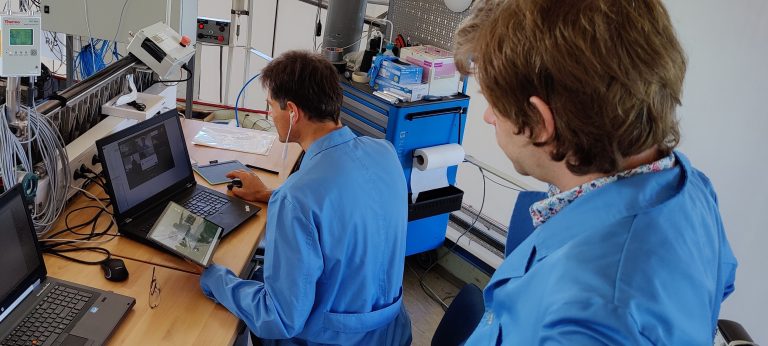
The reactor provides:
- practical exercises within the scope of the Krško NPP operator training programme (in cooperation with the Nuclear Training Centre, ICJT);
- practical exercises for undergraduate and postgraduate students of physics and nuclear engineering at the
- Faculty of Mathematics and Physics, University of Ljubljana;
- practical exercises as part of IAEA and other international training courses;
- on-the-job training for international trainees from developing countries (IAEA, on average 2 per year);
- training of Krško NPP reactor operators;
- participation in international IAEA training courses;
- visualisation of reactor calculations.
Descriptions of experiments and exercises can be found here.
Isotope Production
More information: triga@ijs.si.
Isotope production:
More than 50,000 patients have been treated or diagnosed using radioisotopes produced at the reactor, mainly technetium, fluorine-18, and gold. In addition, 10–20 industrial sealed sources are produced annually (mainly based on cobalt), amounting to several hundred units in total.
The reactor is also used for the production of radioisotopes for special purposes, including radioactive sodium in a water-soluble compound for steam quality testing in the turbines of the Krško Nuclear Power Plant. Another important activity is semiconductor doping, where neutron irradiation is used to improve the properties of materials for the electronics industry.
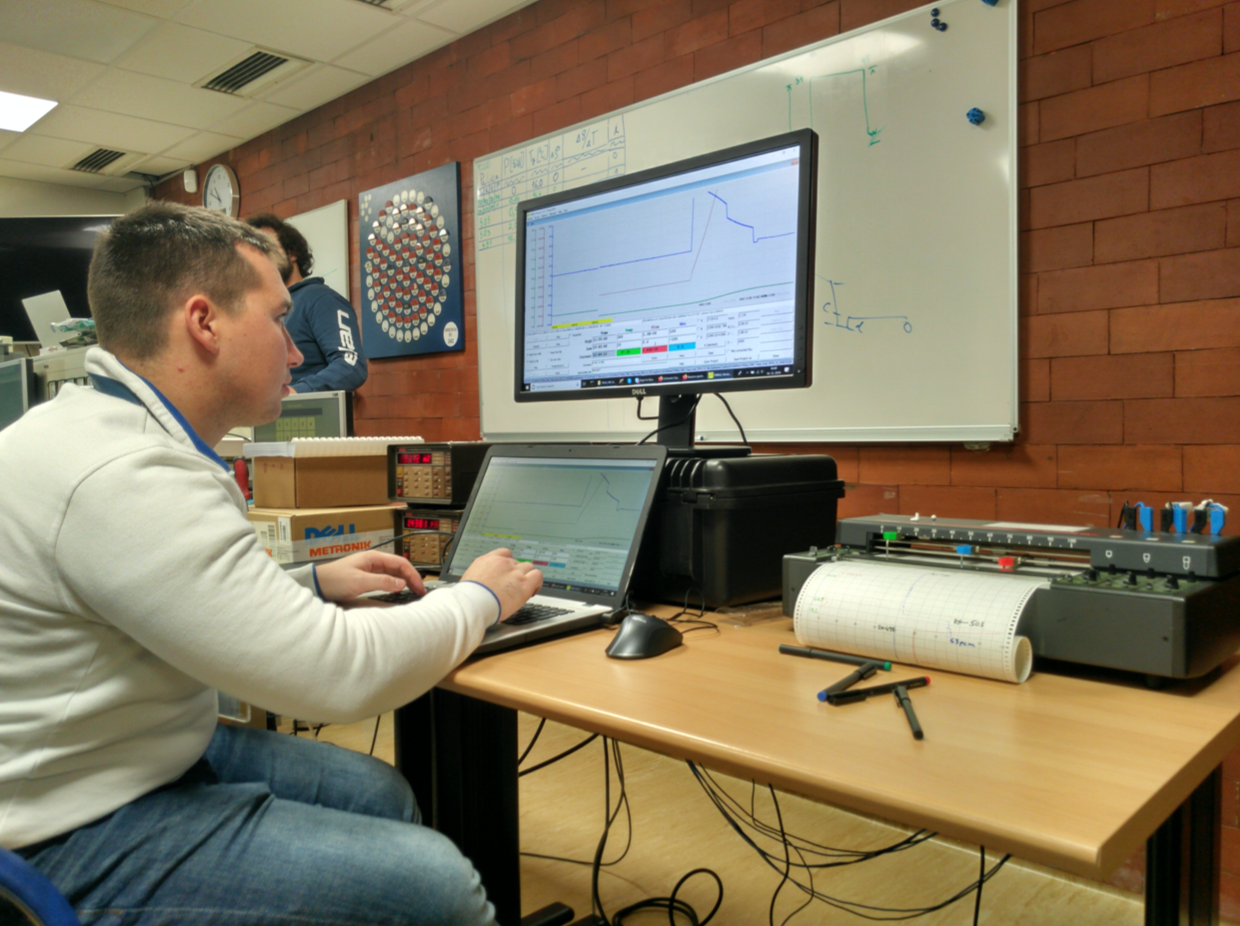
Activities carried out in cooperation with the F8 Department at JSI include:
- development of reactor computer models;
- simulations of neutron flux and power distribution;
- development of specialised software applications (e.g. TRIGLAV, research reactor simulator).
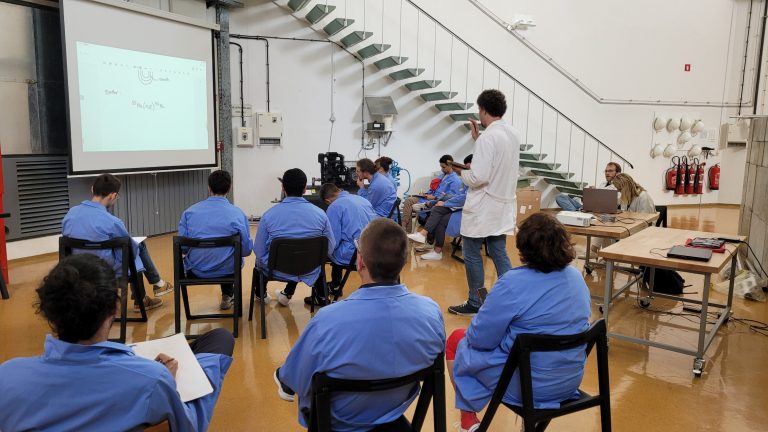
In addition to research and education, the reactor also supports:
- surveillance of refuelling activities during annual Krško NPP outages (fuel shuffling, core loading and physical tests);
- equipment testing and training for performing physical tests at Krško NPP;
- irradiation, manufacturing and servicing of industrial sealed sources;
- cooperation in radiological interventions and other activities of the Ecological Laboratory with Mobile Unit (ELME).
Visits include:
- presentation of the TRIGA research reactor operation;
- guided tour of the reactor hall and equipment (where possible);
- presentation of reactor applications in research, industry and medicine;
- presentation of safety systems and radiation protection;
- professional guidance with content adapted to the target group.
Visit programmes are tailored to different audiences, ranging from primary and secondary school students to university students and professional communities. Special emphasis is placed on education, safety and understanding the use of nuclear energy.
Technical Description
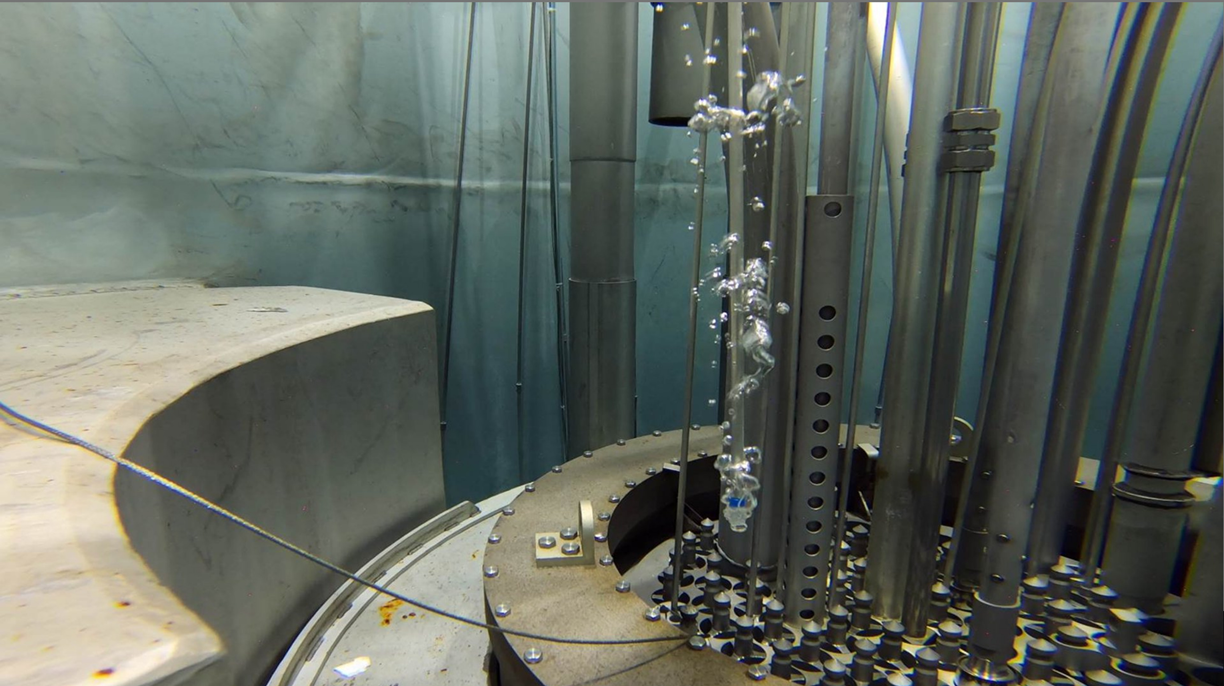
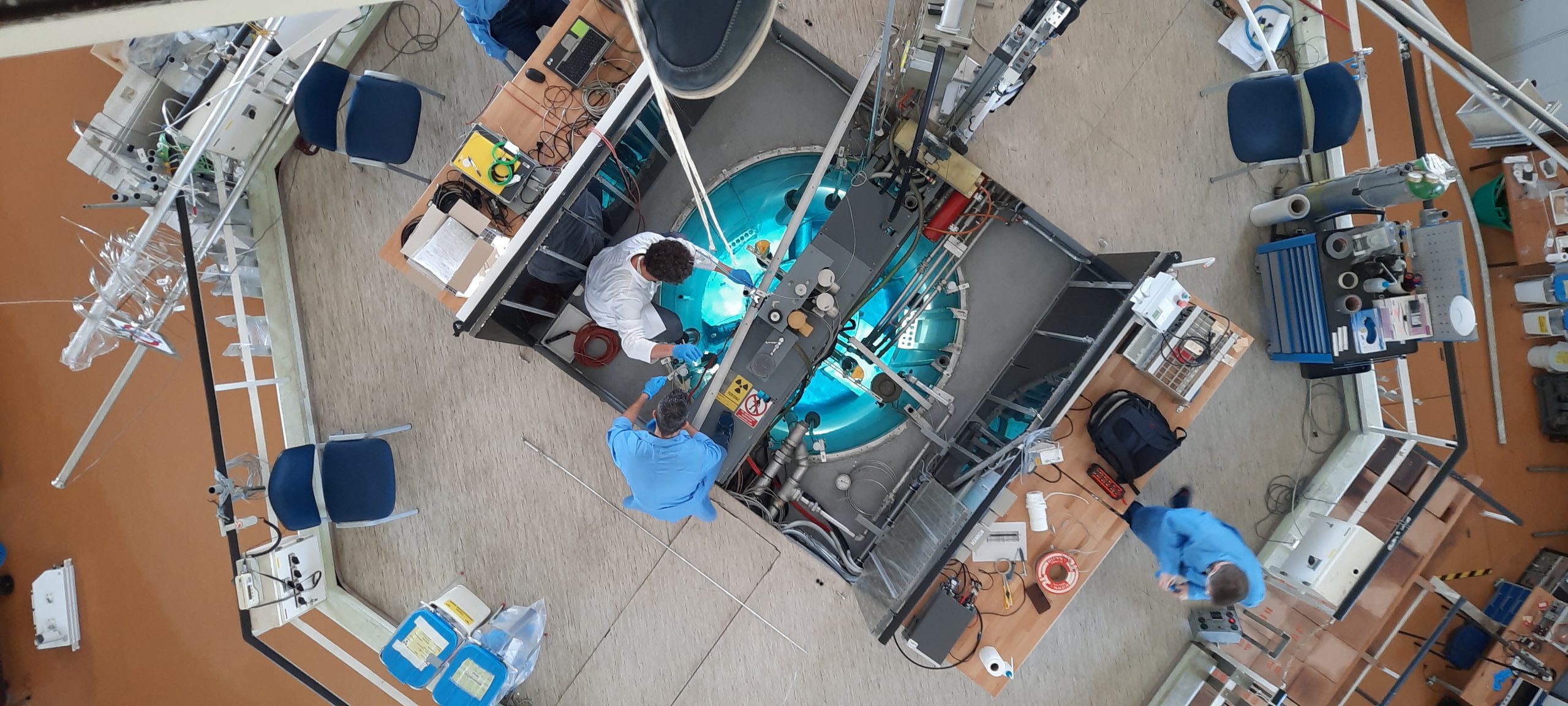
The TRIGA Mark II reactor is a research nuclear reactor with a nominal thermal power of 250 kW, designed for safe and flexible use in research and educational activities. The reactor core is located at the bottom of a pool filled with demineralised water, which serves both as coolant and moderator. Cooling is based on passive natural convection, significantly contributing to the inherent safety of the system.
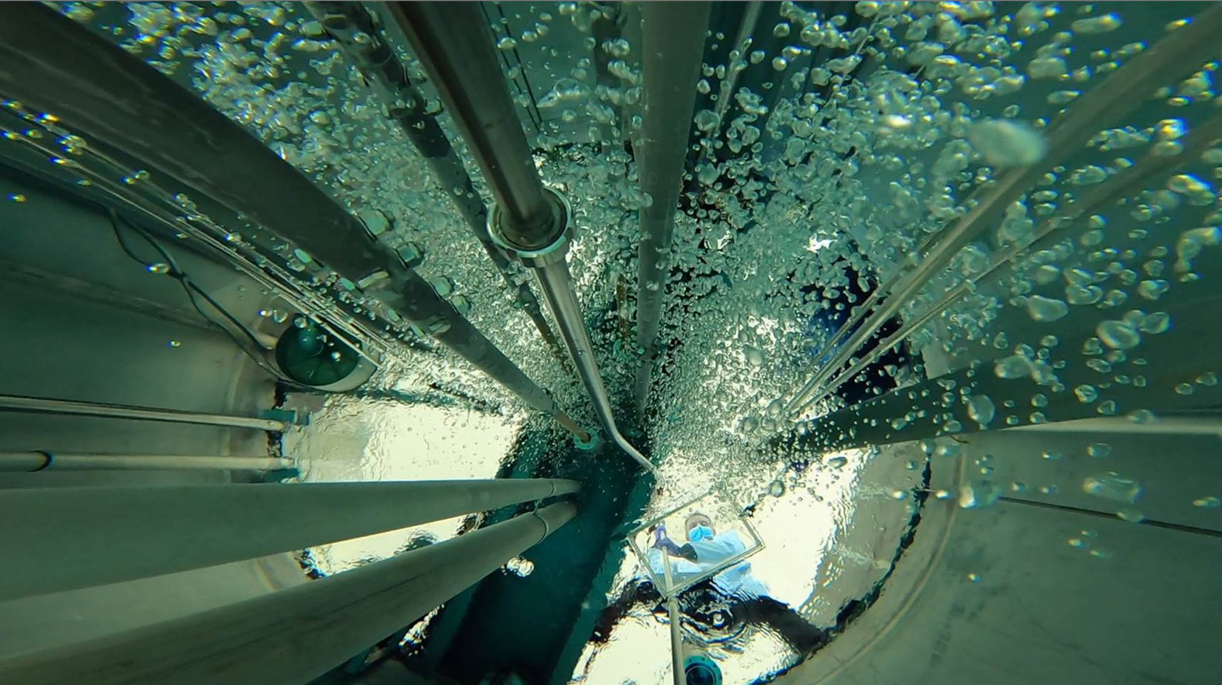
The fuel
consists of uranium-zirconium hydride alloy (UZrH), enriched to 20%, providing the characteristic strong negative temperature feedback. This feature ensures automatic reactor stabilisation in the event of a power increase.
The reactor enables various experimental configurations, including:
- more than 90 core positions for fuel elements, control rods and irradiation channels;
- vertical and horizontal irradiation channels;
- thermal and thermalising columns;
- pneumatic systems for rapid sample irradiation.
Pulse mode operation
A special feature of the reactor is its pulse mode operation, in which reactor power can briefly increase to very high levels. This operating mode is primarily used for research activities and validation of physical models. Videos of pulse mode operation can be found on the YouTube channel.
Manufacturer:
The reactor manufacturer is General Atomics. A more detailed description of such reactors can be found on their website.
Technical reports:
For additional information, a number of technical reports are included, covering detailed operational and physical characteristics of our reactor:
- Reactor utilization
- Detailed technical description of the reactor
- Reactor physics and safety parameters
- Description of pulse mode operation
- TRIGLAV program for reactor core calculations (information available on the website of the Reactor Physics Division (F8), STRIGA program, which enables Monte Carlo calculations for TRIGA reactors, article on TRIGLAV)
Safety and Operation
The TRIGA reactor operates in accordance with the highest national and international nuclear safety standards. Its nuclear safety is based on the inherently safe reactor design, highly qualified personnel, and a comprehensive quality assurance system.
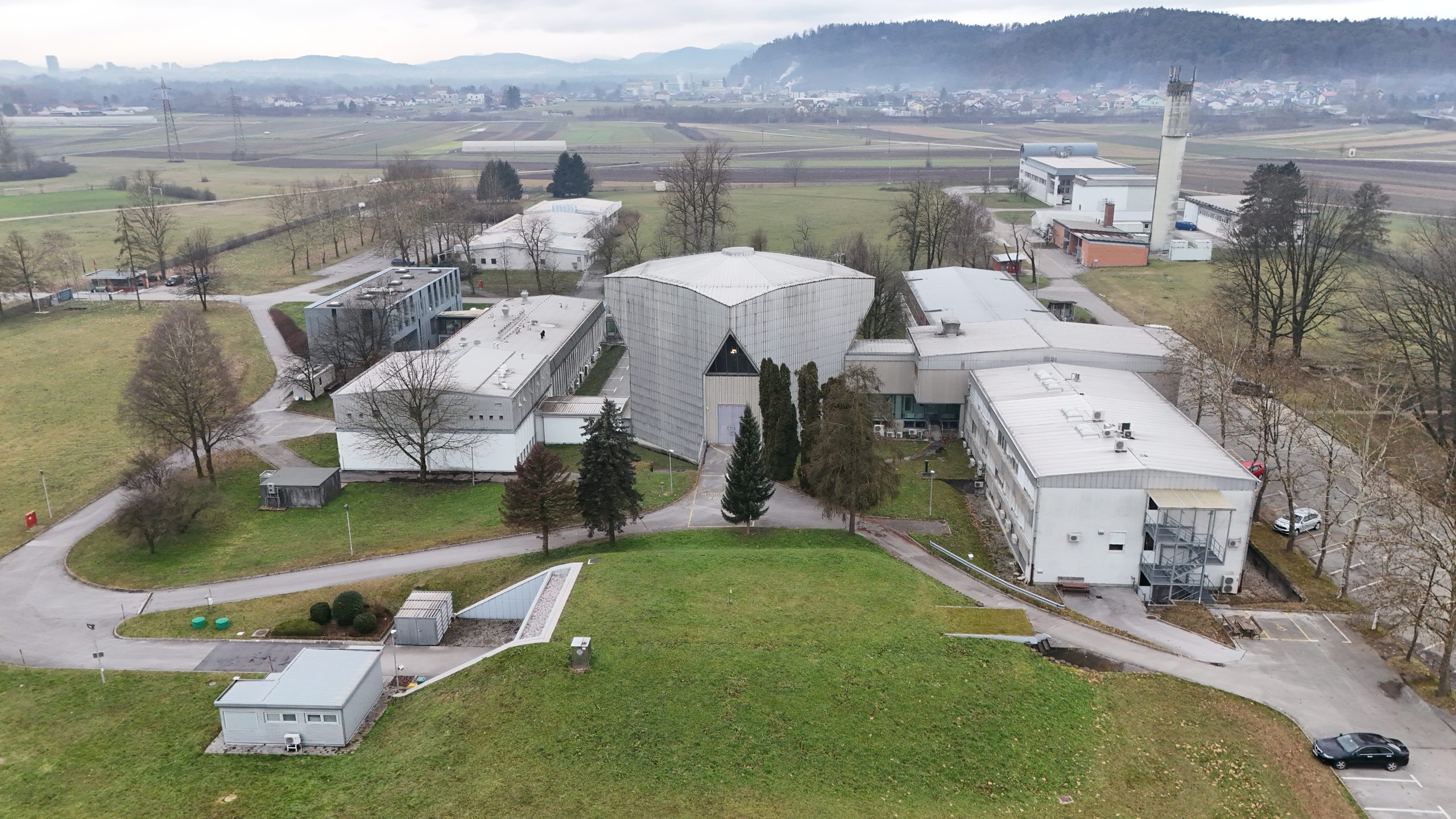
Safety standards:
The operation of the TRIGA reactor is supervised by:
Nuclear safety of the reactor is based on:
- an inherently safe reactor design;
- highly qualified personnel;
- a quality assurance system.
All important issues related to the design, construction, and operation of the reactor that may affect nuclear safety are addressed in a dedicated Safety Analysis Report.
Radiation monitoring:
Environmental radioactivity is continuously monitored. Throughout the entire operational history, there have been no exceedances of permitted limits or any unauthorized releases. Measurements are carried out by the highly qualified and well-equipped Jožef Stefan Institute Radiation Protection Service (SVPIS). The results are regularly submitted to the Slovenian Nuclear Safety Administration (SNSA) and published in annual nuclear and radiological safety reports.
Radioactive waste:
The reactor generates approximately 50 litres of low- and intermediate-level radioactive waste per year. It is stored in the national central interim storage facility for low- and intermediate-level radioactive waste, located next to the reactor building and operated by the Agency for Radioactive Waste Management (ARAO). In 1991, the reactor was thoroughly upgraded, enabling continued safe and efficient operation as well as expanded capabilities. In 1999, all spent fuel elements (a total of 219) were removed from the reactor and shipped to the United States for permanent disposal. Since then, there has been no high-level radioactive waste in the form of spent fuel at the Reactor Infrastructure Centre. The reactor holds a valid operating licence until 2034.
Achievements and Impact
The reactor has played an important role in the development of nuclear technology and safety culture in Slovenia. From the very beginning, it has represented a central point around which modern technologies developed, not only in the nuclear field. Many successful professionals in computing, information technology, energy engineering, radiation protection and other technical disciplines began their careers at the reactor. The reactor is internationally well recognised and is often cited within professional communities as an example of what can be achieved with a small research reactor and limited resources. The international cooperation fostered through reactor activities contributes significantly to the reputation of the Jožef Stefan Institute, Slovenian science and Slovenia as a whole.
Indirect Effects:
Maintaining a high technological level in reactor operation has, from the very beginning, encouraged the introduction of advanced technological solutions that later became widely established:
- the first electronic computer at JSI (ZUSE) was acquired in the 1960s for reactor calculations, marking the beginning of computing development at the Institute;
- the reactor was among the first systems at JSI to use microprocessors for process control;
- computerised data acquisition and experiment control were introduced already in the early 1970s;
- the Reactor Physics Department acquired the first advanced personal computer at JSI (IBM PC XT) for TRIGA reactor calculations.
History
The Role of the TRIGA Reactor in the Development of Nuclear Science in Slovenia
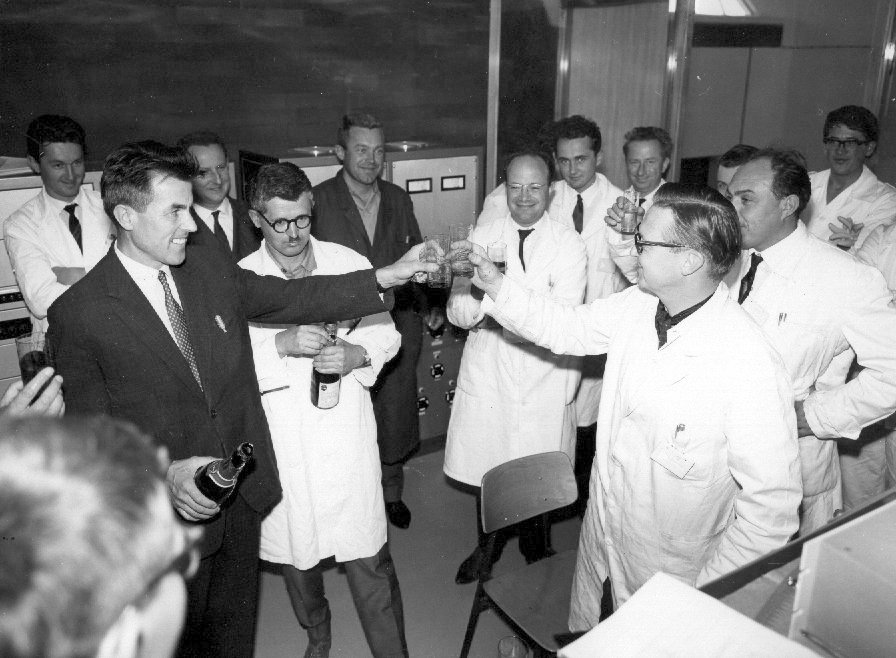
The TRIGA Mark II research reactor represents an important scientific and research infrastructure for the Jožef Stefan Institute, Slovenia and the wider international community. The name TRIGA originates from its core mission:
- T – Training (education and professional training),
- R – Research with neutrons and gamma radiation,
- I – Isotope production,
- G – General,
- A – Atomics.
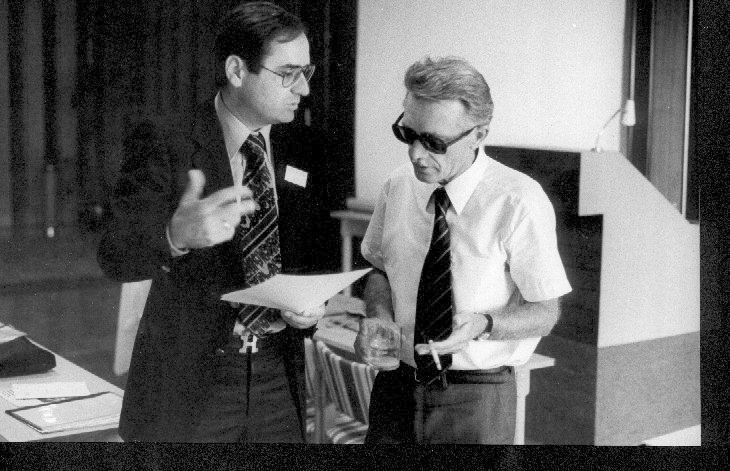
Over decades of operation, the reactor became the central hub of nuclear science development in Slovenia. It made a particularly important contribution during the 1970s and 1980s, when radioactive isotopes produced at the reactor were used for medical diagnostics and treatment of more than 50,000 patients. At the same time, the reactor served as an educational and training environment for generations of nuclear professionals, including personnel involved in the development and operation of Krško Nuclear Power Plant.
Today, the reactor operates as a modern research and educational centre and has been in practically continuous operation for almost 60 years. During this period, there have been no accidents or serious equipment failures resulting in violations of nuclear safety regulations and standards. The reactor currently holds a valid operating licence until 2034. From a technical perspective, however, the TRIGA reactor is capable of operating significantly longer.
Following a major reconstruction in the early 1990s, the reactor gained pulse mode operation capability, further expanding its research potential. In 1999, all spent fuel elements were removed and returned to the USA, meaning that since then there has been no high-level radioactive waste stored at the Reactor Infrastructure Centre.
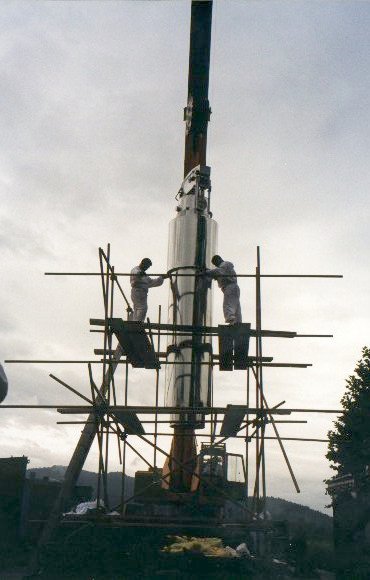
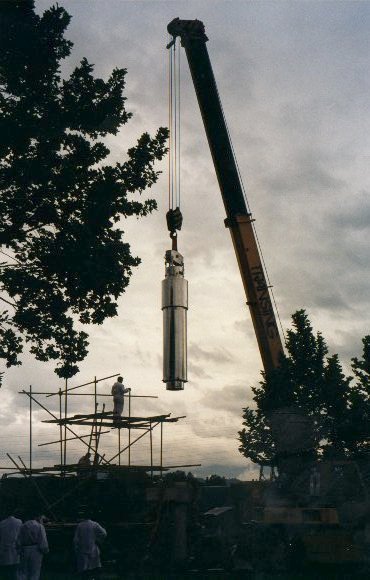
The Role of the TRIGA Reactor in the Development of Nuclear Science in Slovenia
The TRIGA Mark II research reactor represents an important scientific and research infrastructure for the Jožef Stefan Institute, Slovenia and the wider international community. The name TRIGA originates from its core mission:
- T – Training (education and professional training),
- R – Research with neutrons and gamma radiation,
- I – Isotope production,
- G – General,
- A – Atomics.
Over decades of operation, the reactor became the central hub of nuclear science development in Slovenia. It made a particularly important contribution during the 1970s and 1980s, when radioactive isotopes produced at the reactor were used for medical diagnostics and treatment of more than 50,000 patients. At the same time, the reactor served as an educational and training environment for generations of nuclear professionals, including personnel involved in the development and operation of Krško Nuclear Power Plant.
Today, the reactor operates as a modern research and educational centre and has been in practically continuous operation for almost 60 years. During this period, there have been no accidents or serious equipment failures resulting in violations of nuclear safety regulations and standards. The reactor currently holds a valid operating licence until 2034. From a technical perspective, however, the TRIGA reactor is capable of operating significantly longer.
Following a major reconstruction in the early 1990s, the reactor gained pulse mode operation capability, further expanding its research potential. In 1999, all spent fuel elements were removed and returned to the USA, meaning that since then there has been no high-level radioactive waste stored at the Reactor Infrastructure Centre.
Architectural Design of the Reactor
The TRIGA nuclear reactor at the Jožef Stefan Institute was designed by Slovenian architect Oton Jugovec, one of the key representatives of Slovenian architecture in the second half of the 20th century. His work is characterised by inventiveness, a strong sense of spatial composition and the ability to integrate technical requirements with a clear architectural expression. He worked within the circle of architects associated with the seminar of Edvard Ravnikar, which significantly influenced Slovenian architecture of the 1960s and 1970s.
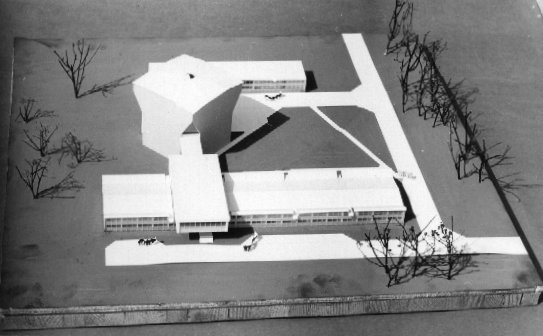
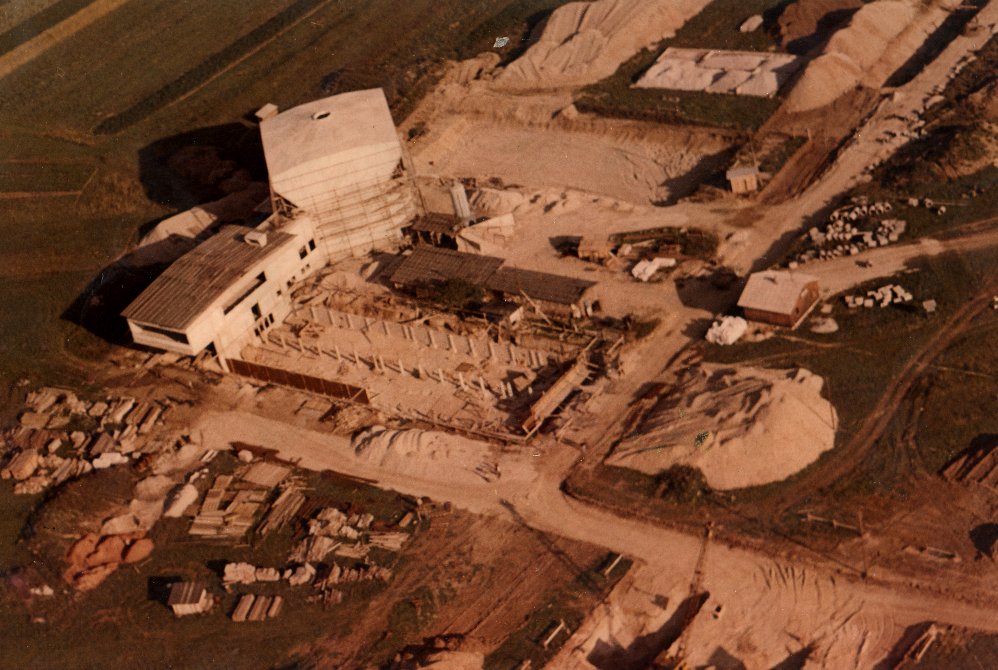
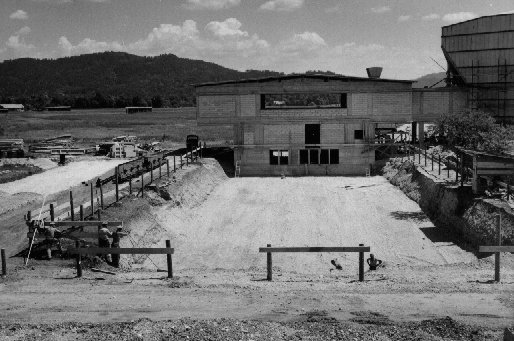
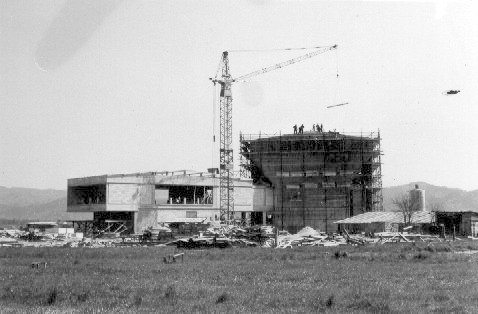
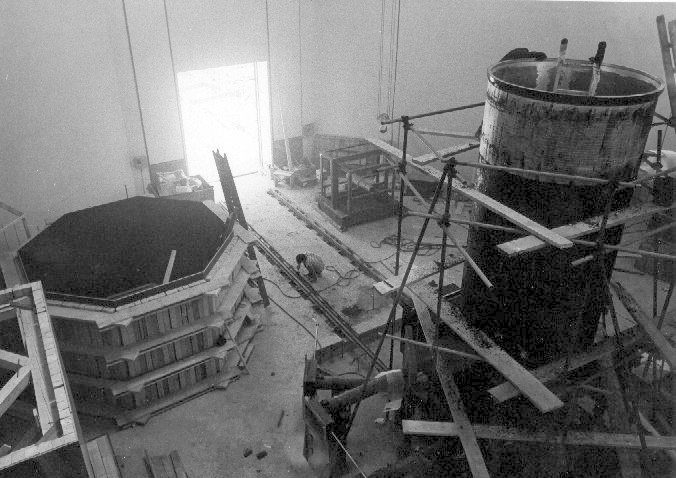
An important reference for understanding the design of the TRIGA reactor is Jugovec’s earlier project for the Reactor Centre in Podgorica, where construction began in 1963 under his leadership within the company Slovenija Projekt. This was his first major architectural project, in which he comprehensively combined his architectural knowledge and vision. For the architectural design of the complex, he received the Prešeren Fund Award.
The reactor building in Podgorica was conceived as a distinctive, almost sculptural volume with a rotated square floor plan. The geometrically deformed cube symbolically represents the nuclear process, an abstract association with the mushroom cloud resulting from a nuclear explosion. Such abstract modernist articulation of space is characteristic of Jugovec’s approach, where architecture transcends purely functional requirements and acquires symbolic meaning.
The spatial organisation of the complex was based on the contrast between the introverted central reactor volume and the extended composition of accompanying facilities. The complex included a propulsion facility and physics wing to the north, and the reactor building with a chemistry wing to the south, while the water tower was positioned separately alongside the technical facilities. Particular architectural features include prefabricated façade solutions, lighter glass volumes and strongly articulated structural elements, such as the elliptical staircase of the water tower.
Similar principles can also be observed in the design of the TRIGA reactor (1961), where Jugovec combined the functional requirements of nuclear infrastructure with a clear architectural concept. The dynamic composition of the buildings contrasts with the flat Sava landscape, while the introverted interior protected by a massive concrete dome expresses both the technological complexity and safety requirements of the facility.
Jugovec successfully translated demanding scientific and technological programmes into a recognisable architectural form. The TRIGA reactor is therefore not only an important research facility, but also an example of a successful synthesis of architecture and technology in Slovenia. For his work, Oton Jugovec received the Prešeren Award in 1984.
“Modern architecture is a composition of elements that are already known, but they must be assembled in a way that expresses the content of the building. This is called composition, and for me that is what truly matters.“
Architectural Design of the Reactor
The TRIGA nuclear reactor at the Jožef Stefan Institute was designed by Slovenian architect Oton Jugovec, one of the key representatives of Slovenian architecture in the second half of the 20th century. His work is characterised by inventiveness, a strong sense of spatial composition and the ability to integrate technical requirements with a clear architectural expression. He worked within the circle of architects associated with the seminar of Edvard Ravnikar, which significantly influenced Slovenian architecture of the 1960s and 1970s.
An important reference for understanding the design of the TRIGA reactor is Jugovec’s earlier project for the Reactor Centre in Podgorica, where construction began in 1963 under his leadership within the company Slovenija Projekt. This was his first major architectural project, in which he comprehensively combined his architectural knowledge and vision. For the architectural design of the complex, he received the Prešeren Fund Award.
The reactor building in Podgorica was conceived as a distinctive, almost sculptural volume with a rotated square floor plan. The geometrically deformed cube symbolically represents the nuclear process, an abstract association with the mushroom cloud resulting from a nuclear explosion. Such abstract modernist articulation of space is characteristic of Jugovec’s approach, where architecture transcends purely functional requirements and acquires symbolic meaning.
The spatial organisation of the complex was based on the contrast between the introverted central reactor volume and the extended composition of accompanying facilities. The complex included a propulsion facility and physics wing to the north, and the reactor building with a chemistry wing to the south, while the water tower was positioned separately alongside the technical facilities. Particular architectural features include prefabricated façade solutions, lighter glass volumes and strongly articulated structural elements, such as the elliptical staircase of the water tower.
Similar principles can also be observed in the design of the TRIGA reactor (1961), where Jugovec combined the functional requirements of nuclear infrastructure with a clear architectural concept. The dynamic composition of the buildings contrasts with the flat Sava landscape, while the introverted interior protected by a massive concrete dome expresses both the technological complexity and safety requirements of the facility.
Jugovec successfully translated demanding scientific and technological programmes into a recognisable architectural form. The TRIGA reactor is therefore not only an important research facility, but also an example of a successful synthesis of architecture and technology in Slovenia. For his work, Oton Jugovec received the Prešeren Award in 1984.
“Modern architecture is a composition of elements that are already known, but they must be assembled in a way that expresses the content of the building. This is called composition, and for me that is what truly matters.“
Experimental Equipment and Facilities Designed at the Reactor
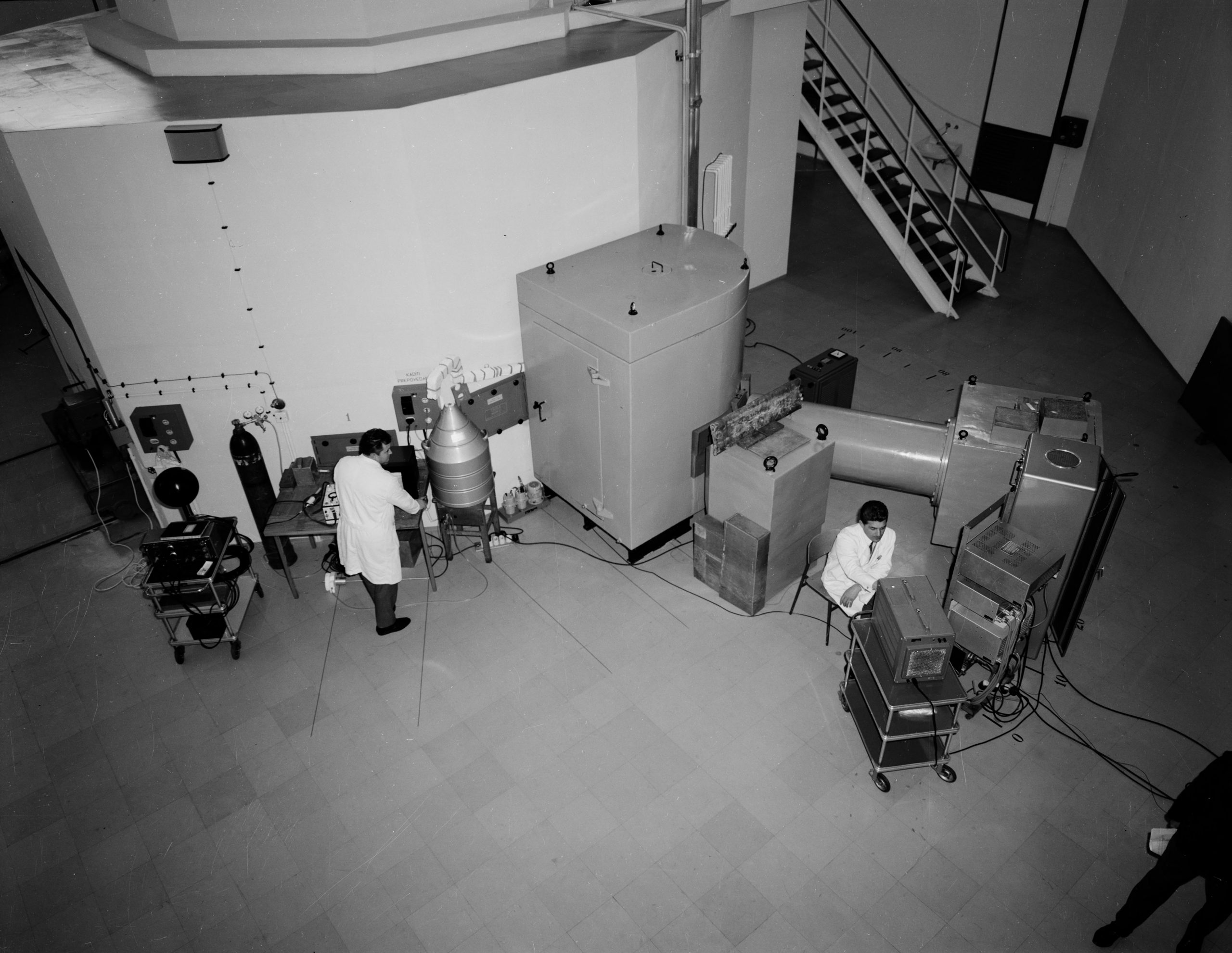
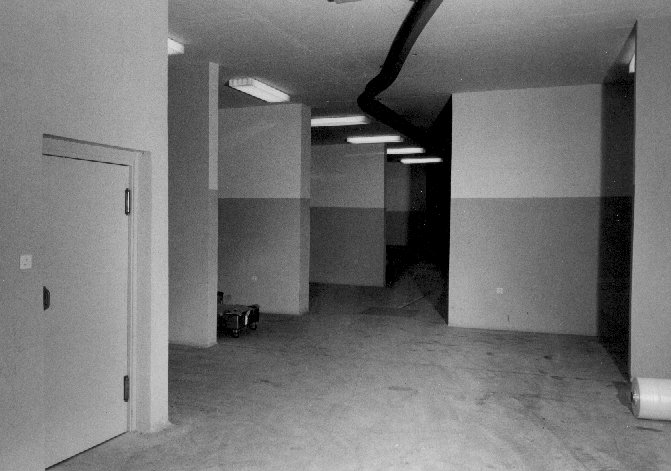
Dr. Peter Kunič and Dr. Viktor Dimic at the neutron time-of-flight spectrometer
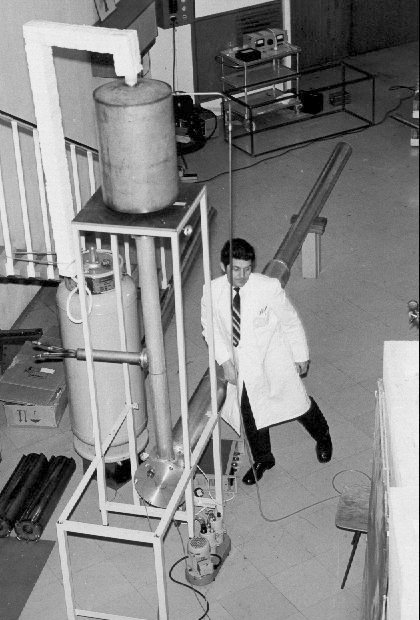
Cold neutron source
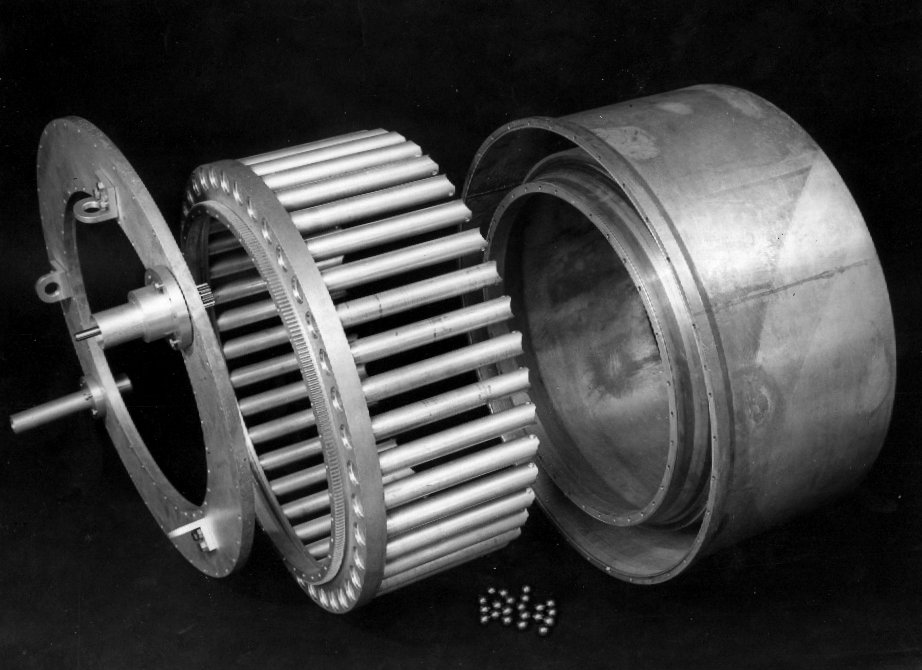
Irradiation rotary specimen rack “Lazy Susan”, fabricated at JSI
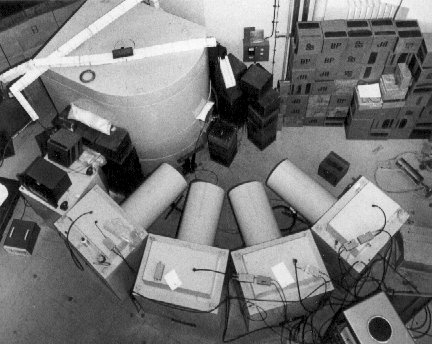
Device for measuring the angular and energy dependence of scattered neutrons
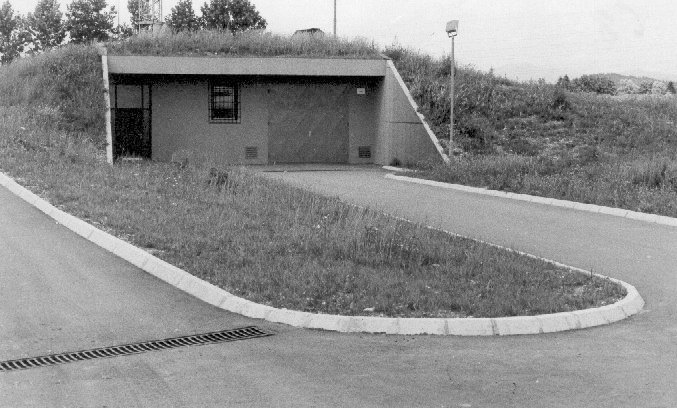
Temporary central storage facility for low- and intermediate-level radioactive waste from research institutes, hospitals and industry
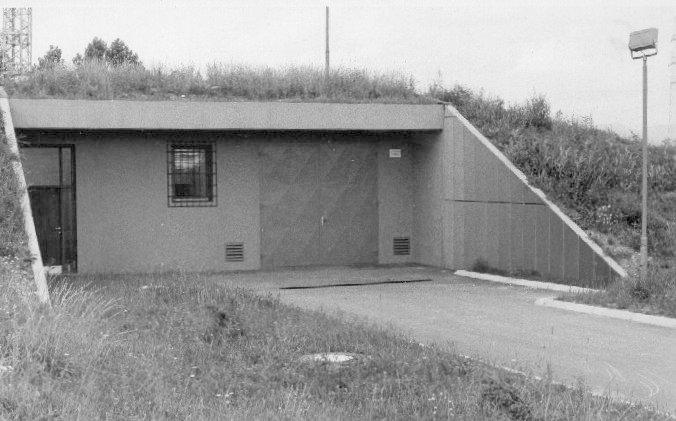
Temporary central storage facility for low- and intermediate-level radioactive waste from research institutes, hospitals and industry