
Info for Users
Operation log, reservations and reactor visits
Events are recorded in Slovenian language only.
Activities
Technical properties
Properties of Irradiation Channels
Properties are described in English only.
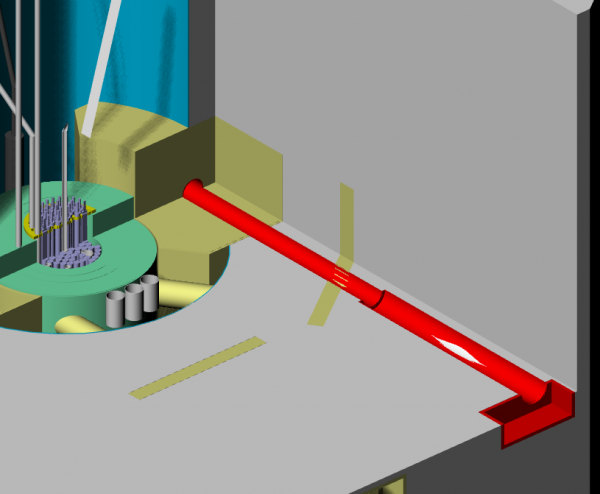
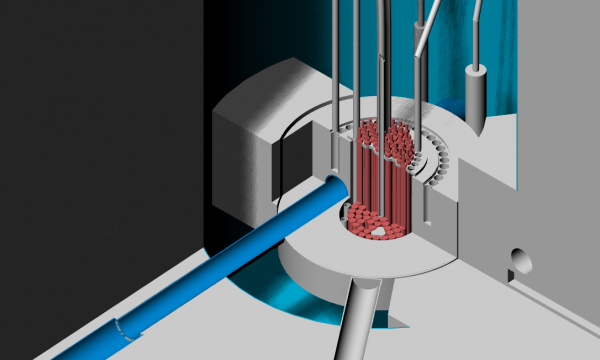
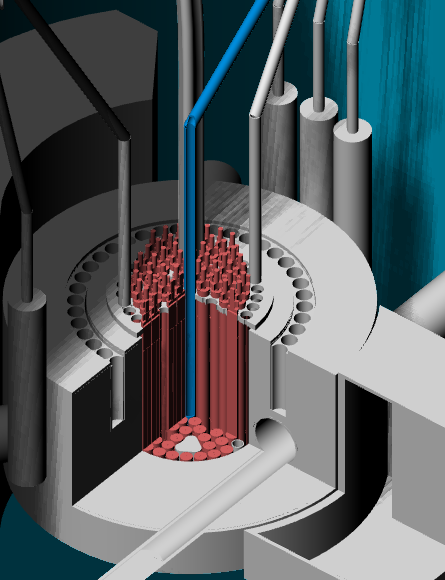
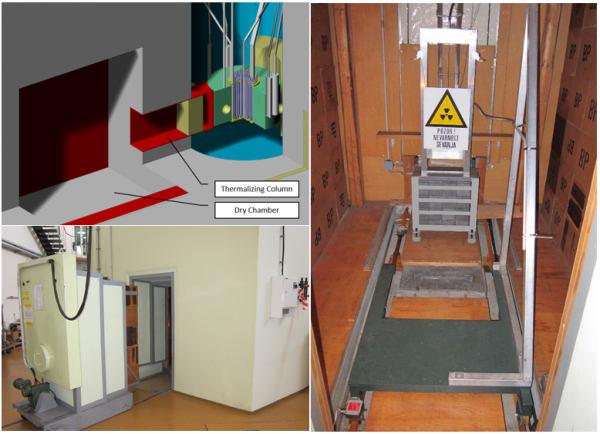
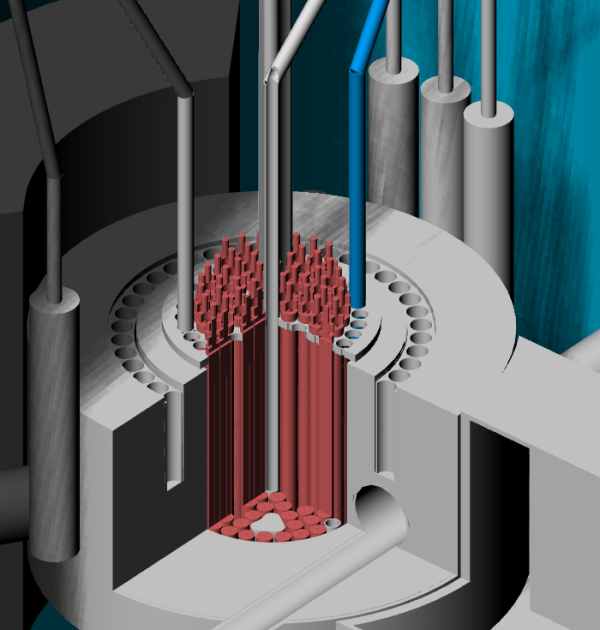
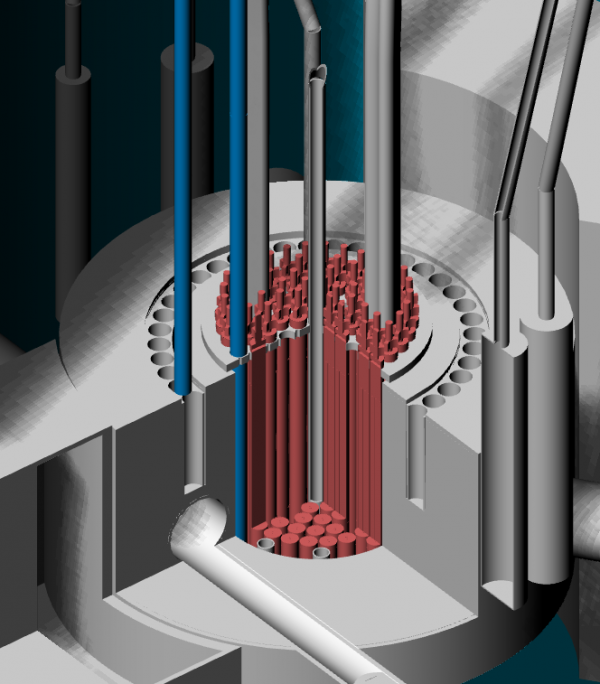
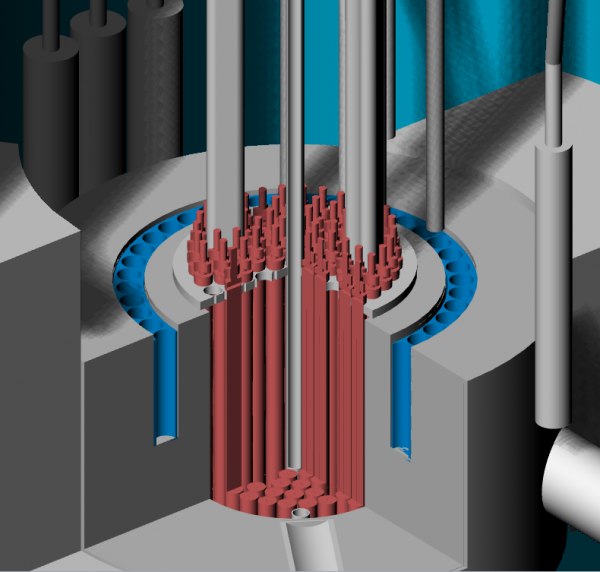
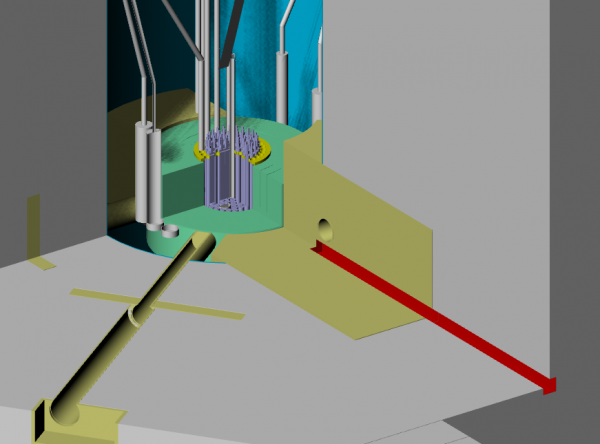
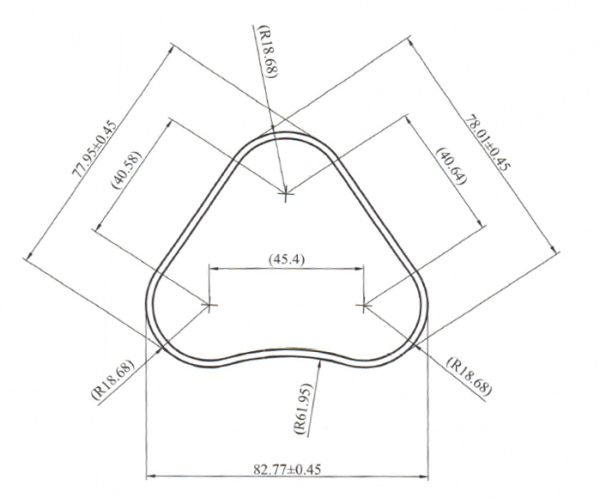
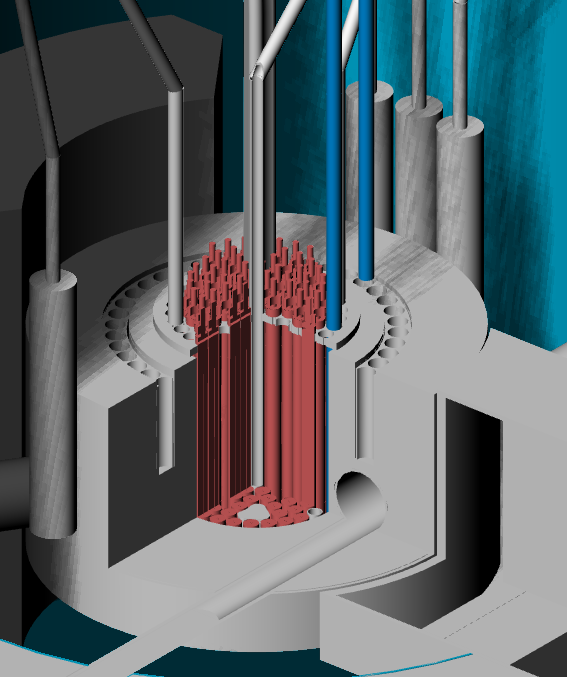
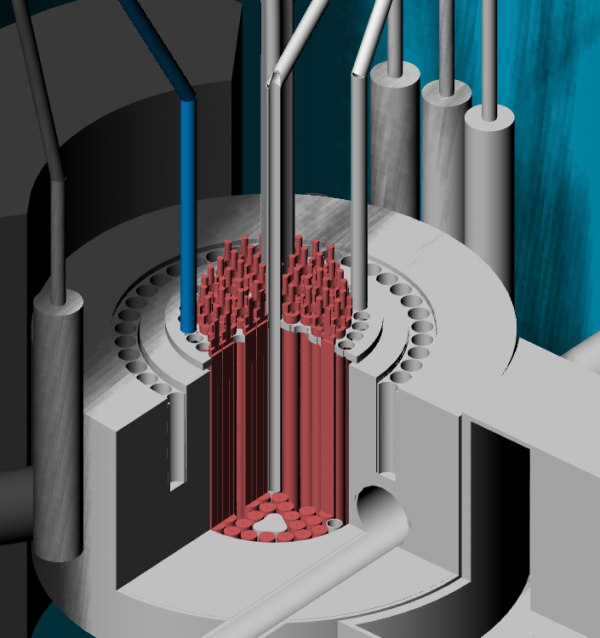
Descriptions of Rabbits and Restrictions
During irradiation experiments, samples are inserted into the reactor using special carriers or capsules (so-called “rabbits”), which enable safe, repeatable and controlled irradiation of materials. The selection of the appropriate system depends on the type of sample, the desired irradiation conditions and the required measurement accuracy.
To ensure safe reactor operation and the protection of personnel and equipment, a number of operational limits and conditions are prescribed. These include permitted activity levels, physical and chemical properties of the samples, irradiation duration and other requirements that must be considered when planning an experiment.
Descriptions of Rabbits and Restrictions
During irradiation experiments, samples are inserted into the reactor using special carriers or capsules (so-called “rabbits”), which enable safe, repeatable and controlled irradiation of materials. The selection of the appropriate system depends on the type of sample, the desired irradiation conditions and the required measurement accuracy.
To ensure safe reactor operation and the protection of personnel and equipment, a number of operational limits and conditions are prescribed. These include permitted activity levels, physical and chemical properties of the samples, irradiation duration and other requirements that must be considered when planning an experiment.
Descriptions of experiments and exercises
Descriptions of experiments and exercises are described in English only.
- Exercise No. 1: Critical experiment
- Exercise No. 2: Reactor response to step reactivity changes
- Exercise No. 3: Fuel temperature coefficient of reactivity
- Exercise No. 4: Control rod worth calibration
- Exercise No. 5: Void coefficient of reactivity
- Exercise No. 6: In-core neutron flux mapping
- Exercise No. 7: In-core gamma field mapping
- Exercise No. 8: Neutron flux measurements using gamma-compensated boron-lined ionization chamber
- Exercise No. 9: Pulse experiment
- Exercise No. 10: Reactor operation
- Exercise No. 11: Neutron activation analysis
- Exercise No. 12: Gamma spectrometry
- Exercise No. 13: Indoor radon measurements
- Exercise No. 14: Primary water activation
Purpose of the experiment
The critical experiment is one of the fundamental experiments in Reactor Physics. Its main purpose is to determine the critical number of fuel elements and / or control rod positions in a critical assembly. The experiment is regularly performed both at experimental and power reactors after each core modification. The purpose of the experiment is to demonstrate the procedure to reach criticality starting from a deeply subcritical state in a controlled sequence.
Outcome / What you will learn
Students will:
- become aware of the importance of the critical experiment,
- perform the critical experiment by control rod withdrawal and plotting of the M-1 diagram as a function of reactivity insertion,
- observe the transients present when approaching criticality and examine the validity of neutron kinetics models in subcritical state.
Execution
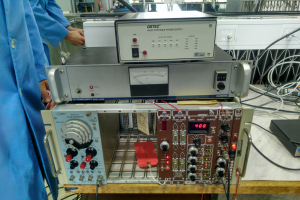
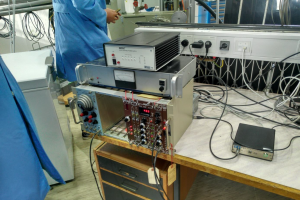
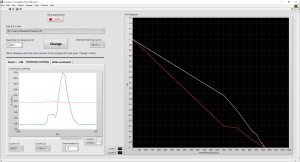
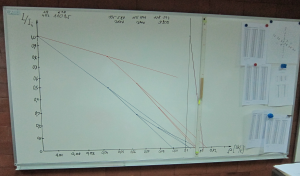
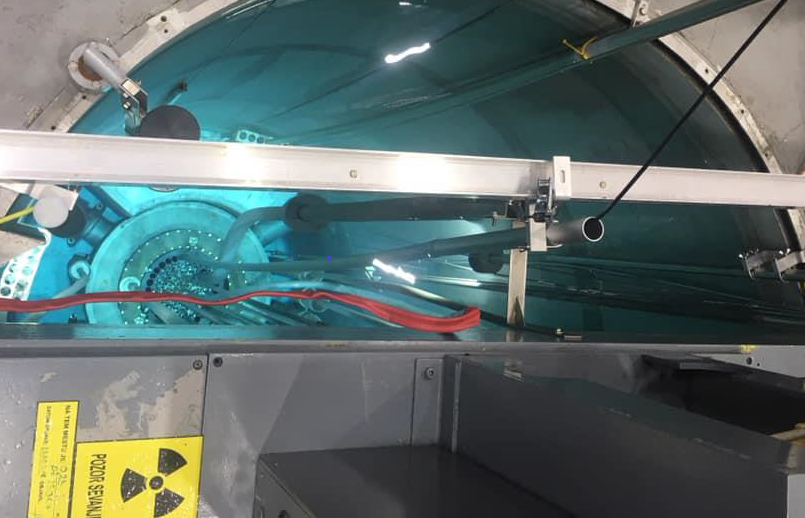
Students perform the critical experiment via gradual control rod withdrawal, measurement of the neutron signal on the starting channel and plotting the M-1 diagram. At every step, students estimate the critical control rod position by extrapolation. To experimentally confirm if the achieved state is subcritical, critical or supercritical, the neutron source is withdrawn from the reactor core following multiple steps, and the time dependence of the neutron source is monitored on line.
Purpose of experiment
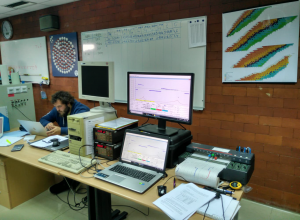
The purpose of the experiment is to demonstrate the principles of reactor kinetics at low power levels and in the operating power level range by inducing step reactivity changes. The reactor power response to reactivity changes is analysed with the aid of a digital reactivity meter and simple theoretical kinetics models.
Outcome / What you will learn
Students will:
- observe and understand the reactor power and period response to a sudden reactivity change at zero power and in operating power level range,
- experimentally determine the point of adding heat (POAH),
- experimentally verify the physical models describing the reactor kinetics by observing the reactor response to step reactivity changes.
Execution
After an initial discussion, students observe the reactor power and asymptotic period response to sudden (step) reactivity change in different power ranges: in the low (zero) power range and in the operating power range. The dependence of the reactor period vs the magnitude of the reactivity is measured and compared with theoretical predictions. The point of adding heat (POAH) of the reactor is determined experimentally.
Purpose of experiment
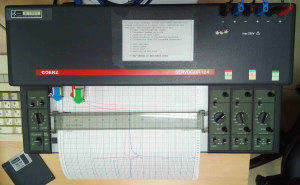
A negative fuel temperature reactivity feedback effect is of key importance in inherently safe reactor design. The purpose of the experiment is to measure the fuel temperature reactivity coefficient of the TRIGA reactor, i.e. the reactivity change due to a change in the fuel temperature.
Outcome / What you will learn
Students will:
- discuss the physical principles governing fuel temperature reactivity feedback;
- observe the response of the reactivity, fuel temperature and reactor power, in a sequence of swift changes in reactivity, caused by the movement of a control rod;
- understand the feedback effect of the fuel temperature on the reactivity and the power of a reactor – this being a prerequisite for understanding the temperature and power reactivity defects.
Execution
After discussion on the physical principles governing the fuel temperature reactivity effects, students determine the fuel temperature coefficient of reactivity as a function of the fuel temperature, and the power coefficient of reactivity as a function of power.
Purpose of experiment
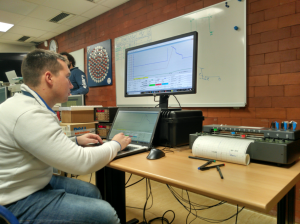
The negative reactivity induced by control rod insertion is a parameter of key importance for safe reactor operation. The relation between the control rod position and reactivity is non-linear, therefore the control rod worth calibration curves are of great assistance to the reactor operator, enabling the estimation of the shutdown margin and critical control rod positions. The purpose of the experiment is a demonstration of several methods of control rod worth calibration.
Outcome / What you will learn
Students will:
- gain knowledge on the dependence of the negative reactivity on the depth of the control rod insertion (integral worth),
- gain knowledge on the control rod worth at different positions (differential worth),
- learn how to experimentally calibrate control rods using the rod swap and dynamic rod insertion methods.
Execution
After discussion of the basic concepts, students determine the integral and differential worth curve for a chosen control rod (e.g. the regulating rod of the JSI TRIGA reactor) using the rod swap method and the dynamic rod insertion method. In each step of the rod swap procedure, students predict the magnitude of the changes in reactivity due to insertion / withdrawal of the measured / calibrated control rod, and analyse the results on the spot. In the dynamic rod insertion method, students coordinate and time the measurement sequence and analyse the results.
Purpose of experiment
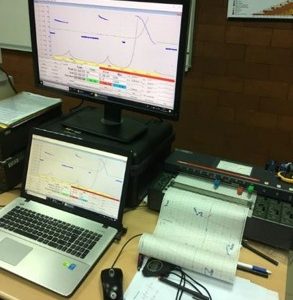
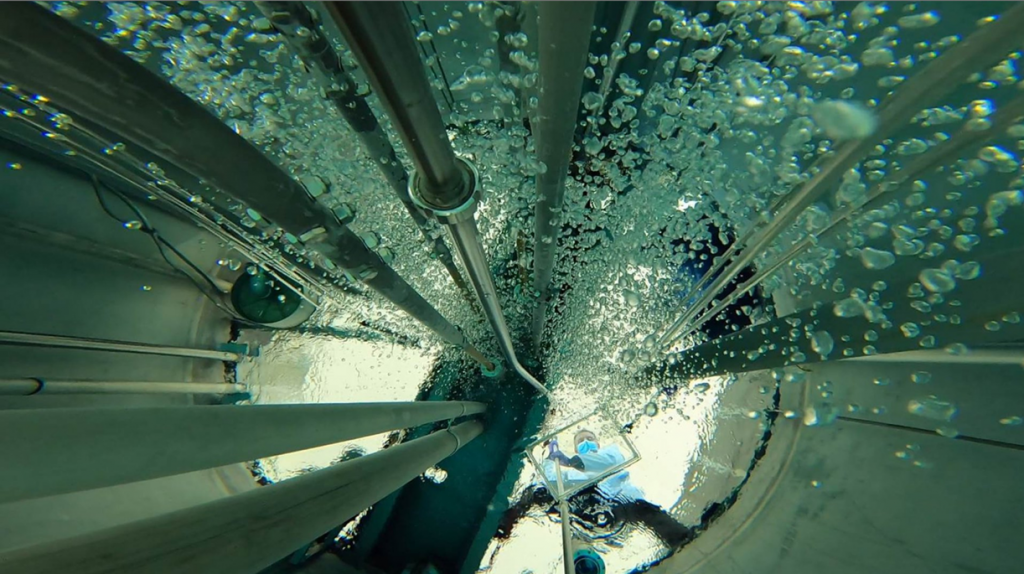
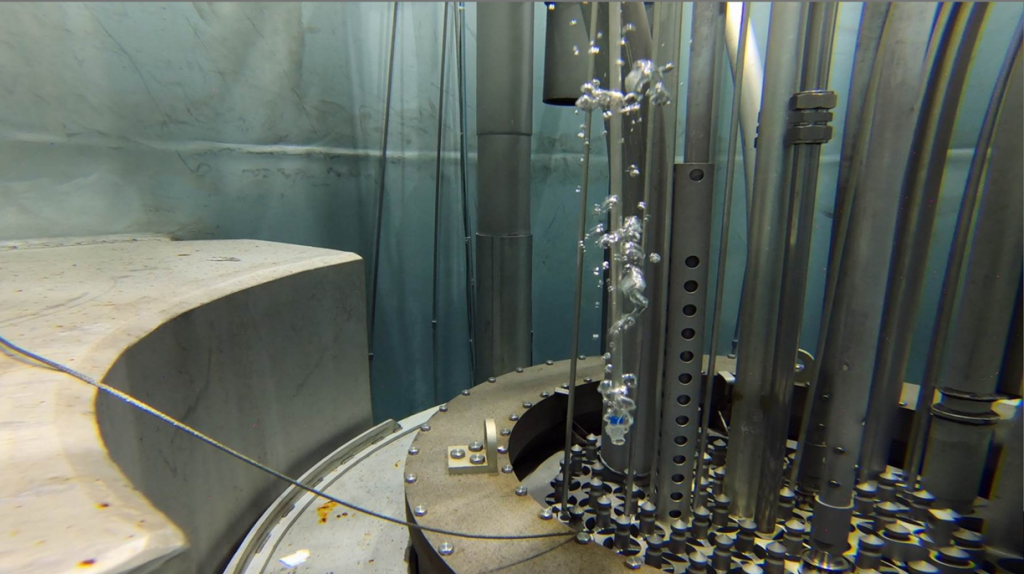
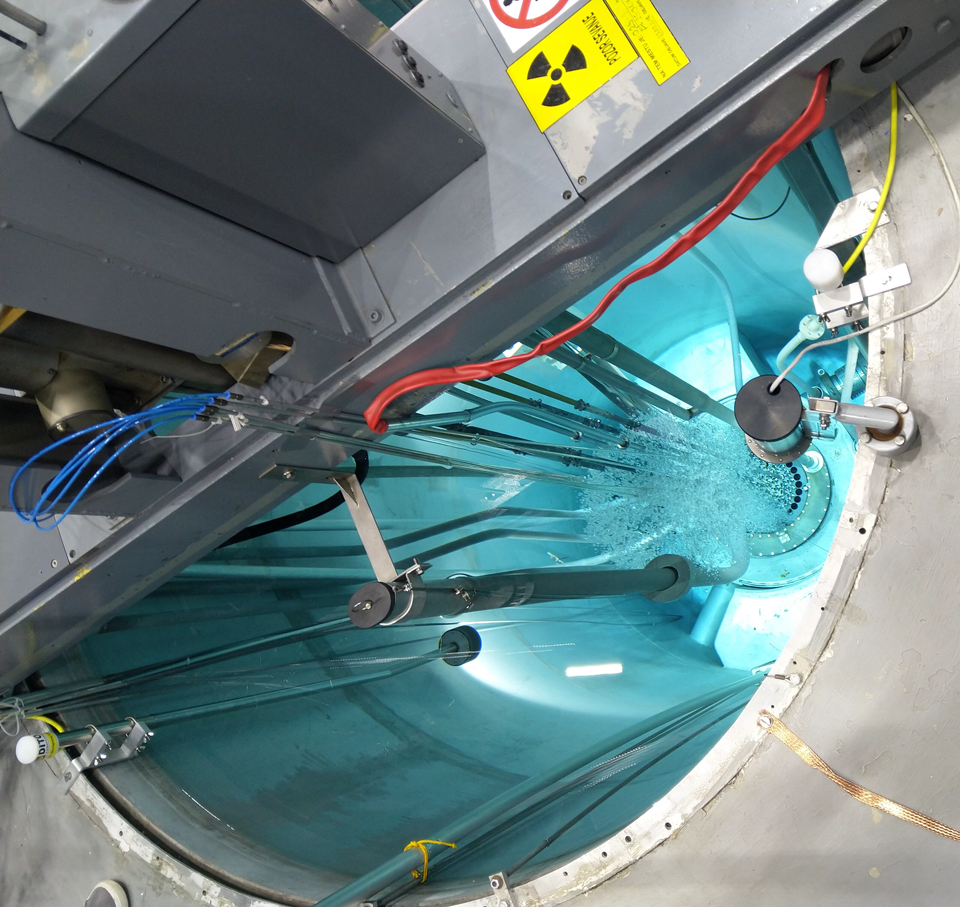
The void coefficient of reactivity is one of the most important coefficients of reactivity for safe reactor operation. The JSI TRIGA reactor is equipped with an electro-pneumatic system with which air can be injected into the reactor core to simulate void formation through boiling. The purpose of the experiment is the measurement of the magnitude of the void coefficient as a function of the radial location in the reactor core.
Outcome / What you will learn
Students will:
- observe the change in reactivity caused by the presence of air bubbles in the reactor core,
- understand the magnitude and sign of the reactivity coefficient, depending on the location in the reactor core where air bubbles are injected.
Execution
The task of the exercise is to measure the void coefficient of reactivity by introduction of void into several different positions in the core. The total volume of the voids is estimated on the basis of the flow rate, which is measured by the electro-pneumatic system. The magnitude and sign of the void coefficient of reactivity is determined and visualized on the spot, in dependence on the position on the reactor core.
Purpose of experiment
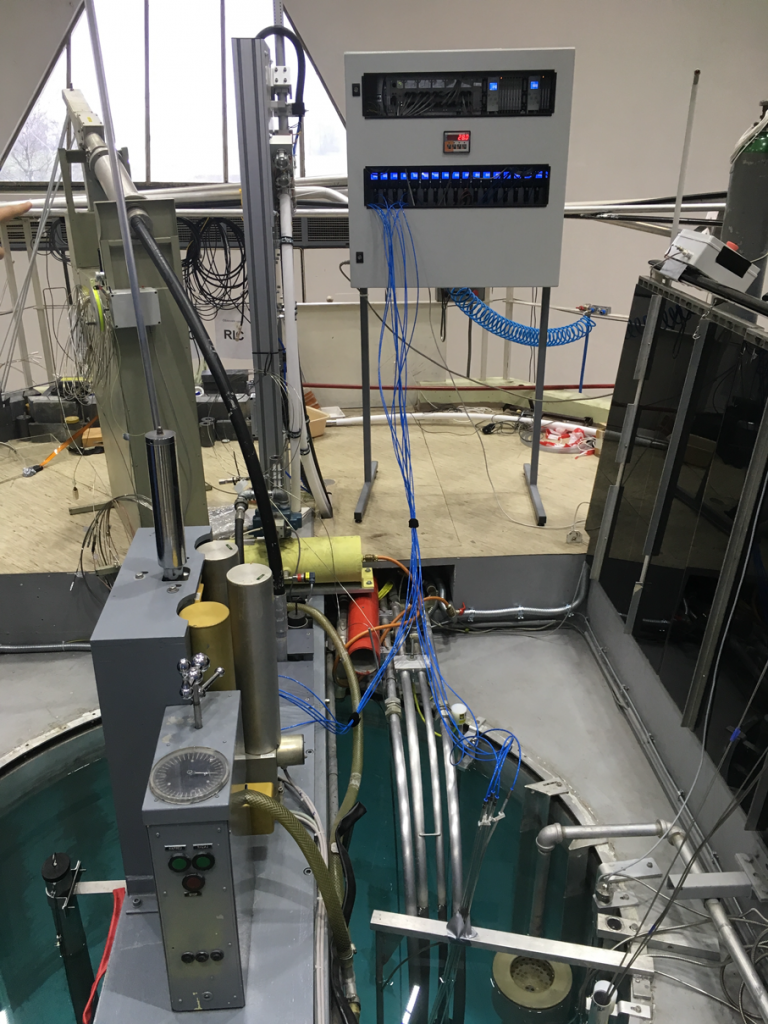
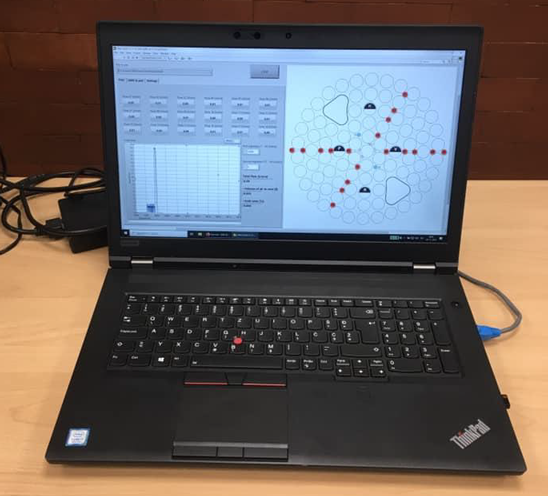
The purpose of the experiment is the measurement of relative axial neutron flux distributions in several experimental locations in the core of the JSI TRIGA reactor. This is accomplished through the use of miniature fission chambers with an external diameter of 3 mm, inserted into specially designed guide tubes and a JSI-developed pneumatic positioning system.
Outcome / What you will learn
Students will:
- measure axial neutron flux profiles with miniature fission chambers in several different measuring positions and control rod configurations,
- visualize the effect of the insertion of a control rod on the neutron flux distribution,
- analyse the shape of the neutron flux profile and compare it with theoretical predictions.
Execution
Students perform relative axial fission rate profile measurements in the core of the TRIGA reactor in several radial positions, and compare the measured profiles with theoretical predictions. Features in the measured profiles due to heterogeneity of the reactor fuel are discussed. Measurements are performed with two control rod configurations in order to visualize on the spot the effect of the insertion of a control rod on the neutron flux distribution.

Purpose of experiment
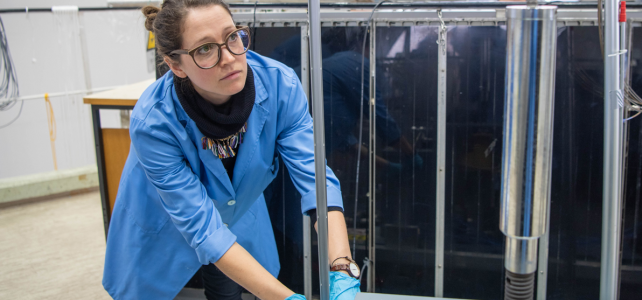
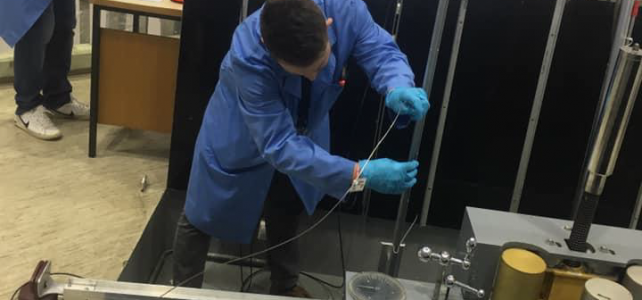
A nuclear reactor in operation is a source of a mixed neutron and gamma field, a shut-down nuclear reactor is a source of a gamma field. The purpose of the exercise is the measurement of the gamma field intensity in the vicinity of the fuel elements in the reactor core and in locations outside the reactor core, during reactor operation and in shutdown conditions. The fraction of the delayed gamma field magnitude vs. the total (composed of prompt and delayed gamma rays) during reactor operation is estimated by measurements following a rapid reactor shutdown (SCRAM).
Outcome / What you will learn
Students will:
- learn about prompt and delayed gamma radiation,
- become familiar with miniature ionization chambers,
- characterize gamma field intensity distribution inside the reactor core and in ex-core locations,
- estimate the fraction of the delayed gamma field magnitude during reactor operation.
Execution
After discussion on the physical background and the experimental setup, students:
- measure the ionization chamber leakage current and background,
- measure the ionization chamber current dependence on the reactor power (0 – 250 kW),
- Characterize gamma field intensity distribution inside the reactor core and in ex-core locations,
- measure gamma field intensity after a rapid reactor shutdown (SCRAM) and estimate the delayed gamma field magnitude fraction during reactor operation.
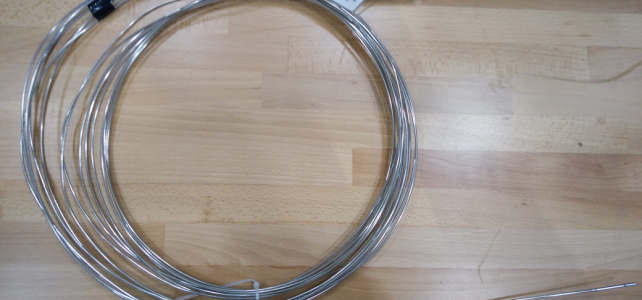
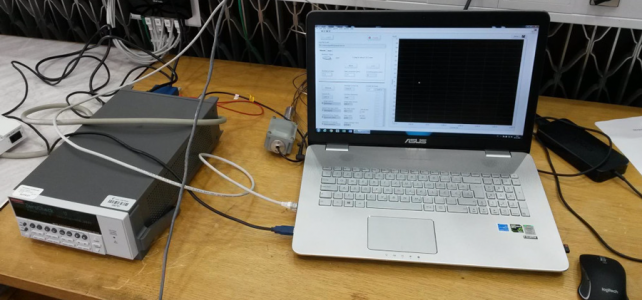
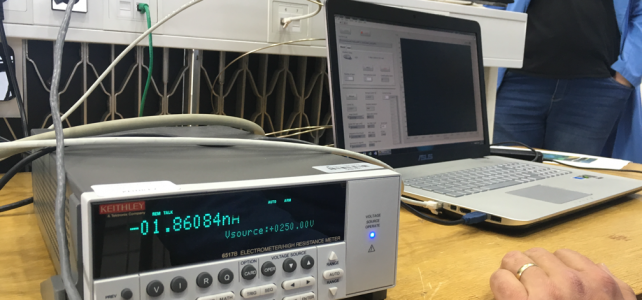
Purpose of experiment
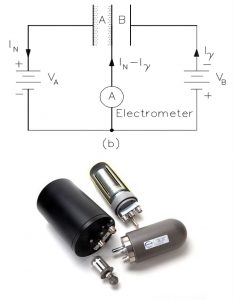
The purpose of the experiment is familiarization with the construction and operation of compensated boron-lined ionization chambers, which are frequently used as nuclear instrumentation detectors. Basic principle of chamber compensation are explained and demonstrated practically in a mixed neutron and gamma radiation field. Measurements of compensated ionization chamber response linearity are performed at different degrees of compensation.
Outcome / What you will learn
Students will:
- learn about the construction and operation of a gamma-compensated ionization chamber,
- experimentally determine the compensation voltage,
- test the linearity of chamber response at different degrees of compensation.
Execution
- The construction and operation of a compensated ionization chamber is discussed.
- Chamber compensation is demonstrated in the gamma radiation field in the reactor core at zero power.
- The current vs. voltage characteristic is measured at different reactor power levels.
- The chamber response linearity vs. reactor power is tested at different degrees of chamber compensation.
Purpose of experiment
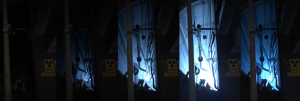
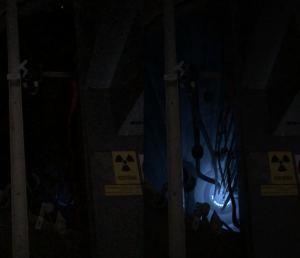
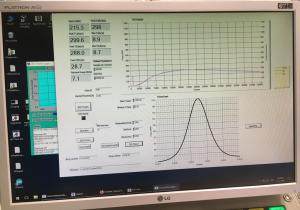
The pulse experiment is a demonstration of a reactor transient in a supercritical state, made possible by the inherently safe design of the TRIGA reactor. The aim of the experiment is to perform several pulses by rapidly withdrawing a control rod, measuring basic pulse parameters and experimentally validating the Fuchs-Hansen model.
Outcome / What you will learn
Students will:
- observe and understand the reactor response to a large sudden reactivity increase following the ejection of a control rod out of the reactor core,
- experimentally verify the physical models describing the pulse experiment (the Fuchs-Hansen model).
Execution
After a discussion on the temperature reactivity effects and the Fuchs-Hansen model, students observe the behaviour of the reactor power and fuel temperature following sudden large insertions of reactivity, caused by the ejection of a control rod out of the reactor core. Students measure three pulse parameters: the maximum power, released energy and maximum fuel temperature, and observe their dependence to the prompt reactivity, thereby experimentally validating the Fuchs-Hansen model.The construction and operation of a compensated ionization chamber is discussed.
Purpose of experiment
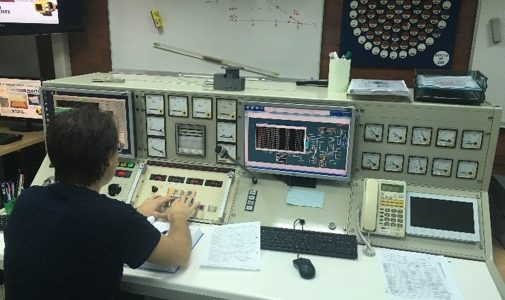
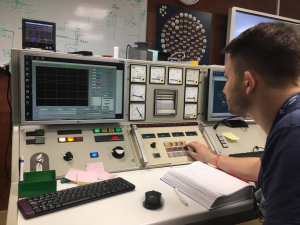
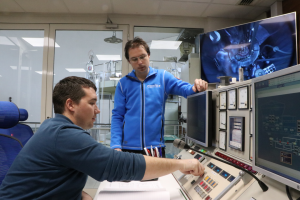
The exercise allows students to operate the reactor on their own under the supervision of a licensed reactor operator. First the students have to achieve criticality, then they have to change the reactor power level and stabilize the reactor at low power, below the point of adding heat. Secondly, they increase the reactor power above POAH and observe the reactor response to control rod movement at high power levels, where temperature feedback effects are significant. The exercise ends by safe and controlled shut down of the reactor.
Outcome / What you will learn
Students will become familiar with reactor operation, focusing on:
- safe reactor operation;
- pre-startup procedures;
- startup to low power level, change of power level;
- reactor shutdown.
Execution
After a discussion on the general features and systems of the reactor, reactor operation procedures and operating limits, students operate the reactor on their own. During operation, students observe the signals from the reactor instrumentation, i.e. the source range meter, linear channel, period meter and indicators of control rod positions. Each student performs a sequence in which the reactor is started up and stabilized at a low power level, the power level is then changed to a higher power level, and finally the reactor is shut down. No measurements are taken.
Purpose of experiment
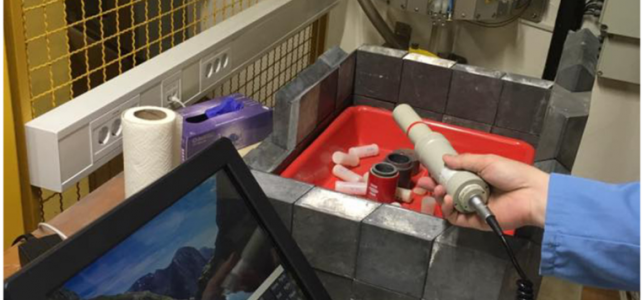
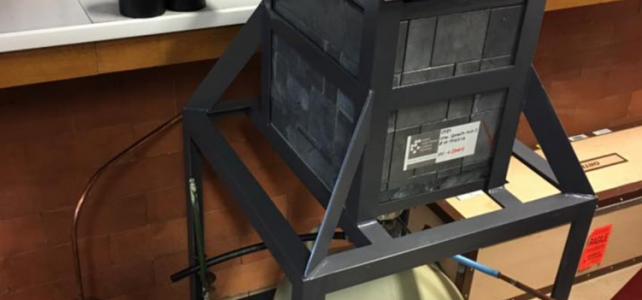
The purpose of the experiment is a demonstration of the relative neutron activation analysis technique (NAA). This technique is widely used in a variety of fields (e.g. environmental sciences, forensic science, analysis of geological and inorganic materials, foodstuff, etc.). It plays a key role within environmental specimen banking programmes.
Outcome / What you will learn
Students will:
- prepare samples and standards for irradiation in the neutron field of a nuclear reactor,
- perform the irradiations and measure the gamma spectra of the irradiated samples and standards,
- analyse gamma spectra and determine analyte concentrations.
Execution
- Preparation and weighing of samples and standards;
- encapsulation of the test portions and standards in e.g. polyethylene foil / capsules;
- neutron irradiation of samples and standards;
- sequential measurements of the induced radio activities in samples and standards by gamma-ray spectrometry;
- interpretation of the gamma-ray spectra (i.e. peak fitting;
- calculation of the concentrations in the samples.
Purpose of experiment
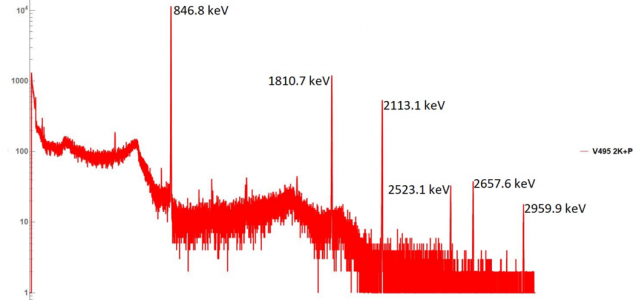
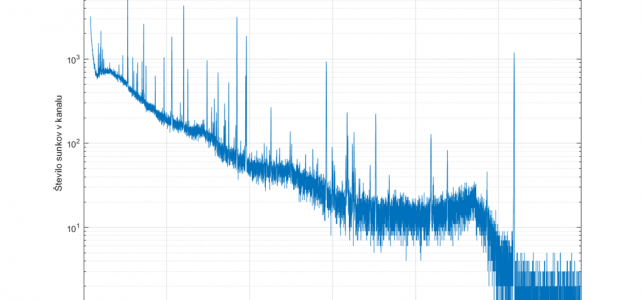
Gamma (ray) spectrometry is a widely used measurement technique in which gamma ray spectra originating from radioactive isotopes are analyzed. The purpose of the experiment is to demonstrate the gamma spectrometry technique by performing gamma spectrum measurements for a selection of radioactive sources. The complex features in the recorded gamma spectra are visualized and their origins explained; radionuclide activities are determined on the basis of the measured spectra, the basic nuclear data and the calibrated detection efficiency.
Outcome / What you will learn
Students will:
- gain experience in gamma spectrometry measurements,
- visualize and understand the complex features in recorded gamma spectra,
- analyse gamma spectra,
- determine the activity of radionuclides in measured radioactive sources.
Execution
- A multi-isotope standard is measured. Various gamma lines are detected and described.
- Previously irradiated samples of certified reference materials (e.g. Al-Au, Al-Co, Al-Th) are measured using gamma ray spectroscopy. Students identify the main characteristics (Backscatter and Compton edge, full energy peak, sum peak from pile-up, single and double escape peaks) in the gamma ray spectra.
- The activities of the radionuclides in the samples are determined on the basis of the calibrated detection efficiency.
Purpose of experiment
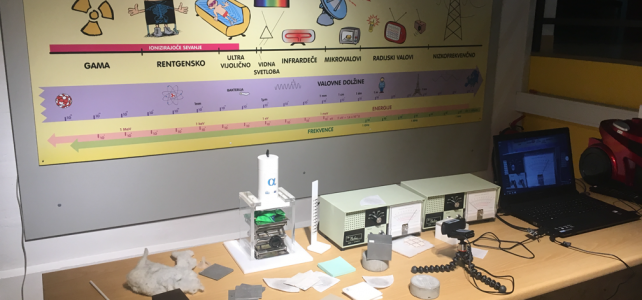
The purpose of the exercise is to measure the activity of radon and radon progeny in an indoor environment. Radon is one of the products of the 238U decay chain and it is the only one in gaseous form, and therefore the only one that can escape the out of the Earth’s crust. Radon may represent a significant contribution to natural radiation exposure, especially in karstic terrain (for which Slovenia is renowned), and after smoking, is the second most important cause of lung cancer.
Outcome / What you will learn
Students will:
- discuss the formation of radon through radioactive decay and diffusion into the atmosphere;
- perform simple experiments to demonstrate the presence of radon by detection of alpha radiation;
- perform radon concentration measurements using the Kuznetz method, by filtering radon progeny from the air and subsequent gamma spectrometry measurement.
Execution
After a discussion on the formation of radon through radioactive decay and its diffusion into the atmosphere, students:
- capture radon progeny onto electrostatically charged balloons and measure the emitted alpha particles;
- perform radon concentration measurements using the Kuznetz method by:
- filtering radon progeny from the air onto filter paper using a vacuum cleaner,
- gamma spectrometry measurements of the filter paper,
- analysis of the recorded gamma spectrum,
- determination of the radon concentration from the measured radon progeny activities.
Purpose of experiment
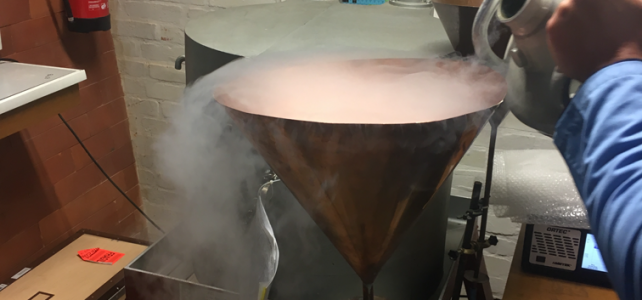
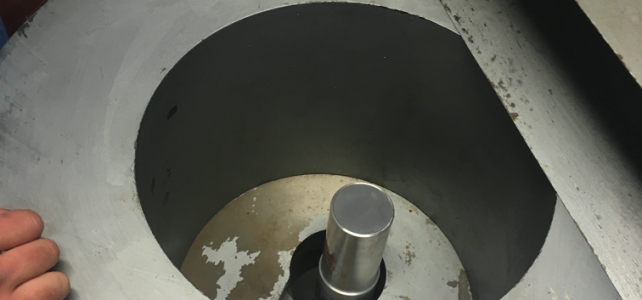
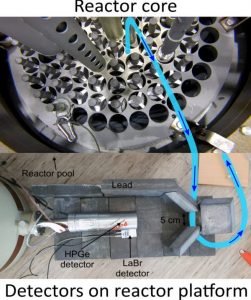
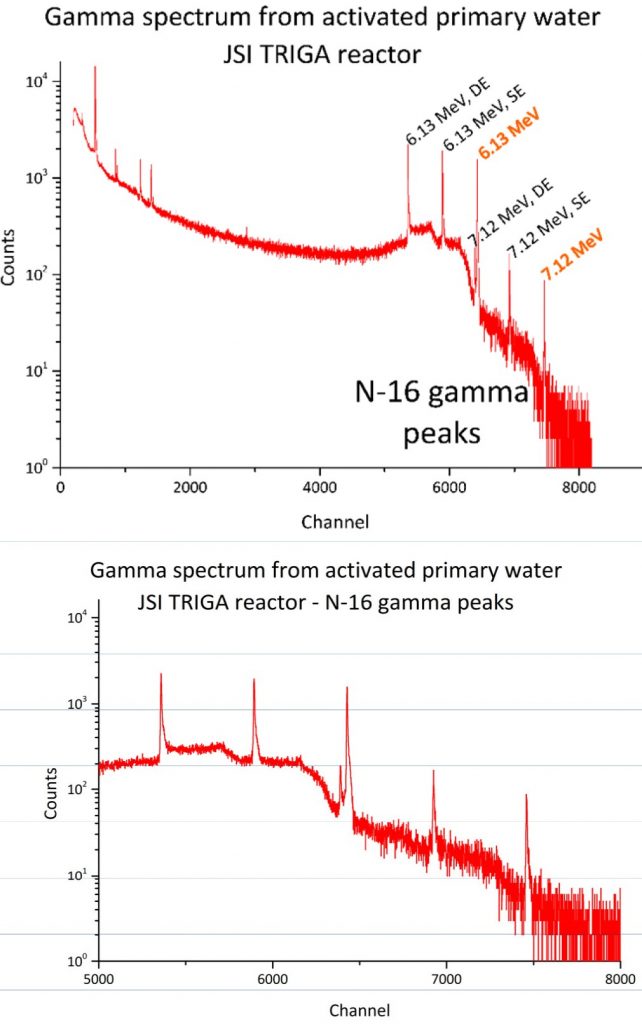
The water activation experiment serves as a demonstration of the creation of radioactive isotopes from nuclear reactions with fast neutrons in pure water. The main reaction product, N-16, is important from the radiation protection standpoint, as it emits energetic and highly penetrating gamma rays, in water-cooled fission and fusion devices. Conversely, measurements of the activities of the product radioactive isotopes represent an independent method of monitoring of the reactor power, leak detection, etc.
Outcome / What you will learn
Students will:
- observe methods for measuring of the activation of the primary water;
- measure the activity of primary water as a function of the reactor power.
Execution
- set up of the experiment on the reactor platform (water activation loop, lead shielding, detectors);
- discussion on the detectors;
- detector energy calibration using radioactive calibration sources;
- measurements of the activity of individual nuclides and the total dose rate as a function of reactor power;
- discussion of the results.
- Exercise No. 1: Critical experiment
- Exercise No. 2: Reactor response to step reactivity changes
- Exercise No. 3: Fuel temperature coefficient of reactivity
- Exercise No. 4: Control rod worth calibration
- Exercise No. 5: Void coefficient of reactivity
- Exercise No. 6: In-core neutron flux mapping
- Exercise No. 7: In-core gamma field mapping
- Exercise No. 8: Neutron flux measurements using gamma-compensated boron-lined ionization chamber
- Exercise No. 9: Pulse experiment
- Exercise No. 10: Reactor operation
- Exercise No. 11: Neutron activation analysis
- Exercise No. 12: Gamma spectrometry
- Exercise No. 13: Indoor radon measurements
- Exercise No. 14: Primary water activation
Purpose of the experiment
The critical experiment is one of the fundamental experiments in Reactor Physics. Its main purpose is to determine the critical number of fuel elements and / or control rod positions in a critical assembly. The experiment is regularly performed both at experimental and power reactors after each core modification. The purpose of the experiment is to demonstrate the procedure to reach criticality starting from a deeply subcritical state in a controlled sequence.
Outcome / What you will learn
Students will:
- become aware of the importance of the critical experiment,
- perform the critical experiment by control rod withdrawal and plotting of the M-1 diagram as a function of reactivity insertion,
- observe the transients present when approaching criticality and examine the validity of neutron kinetics models in subcritical state.
Execution
Students perform the critical experiment via gradual control rod withdrawal, measurement of the neutron signal on the starting channel and plotting the M-1 diagram. At every step, students estimate the critical control rod position by extrapolation. To experimentally confirm if the achieved state is subcritical, critical or supercritical, the neutron source is withdrawn from the reactor core following multiple steps, and the time dependence of the neutron source is monitored on line.
Purpose of experiment
The purpose of the experiment is to demonstrate the principles of reactor kinetics at low power levels and in the operating power level range by inducing step reactivity changes. The reactor power response to reactivity changes is analysed with the aid of a digital reactivity meter and simple theoretical kinetics models.
Outcome / What you will learn
Students will:
- observe and understand the reactor power and period response to a sudden reactivity change at zero power and in operating power level range,
- experimentally determine the point of adding heat (POAH),
- experimentally verify the physical models describing the reactor kinetics by observing the reactor response to step reactivity changes.
Execution
After an initial discussion, students observe the reactor power and asymptotic period response to sudden (step) reactivity change in different power ranges: in the low (zero) power range and in the operating power range. The dependence of the reactor period vs the magnitude of the reactivity is measured and compared with theoretical predictions. The point of adding heat (POAH) of the reactor is determined experimentally.
Purpose of experiment
A negative fuel temperature reactivity feedback effect is of key importance in inherently safe reactor design. The purpose of the experiment is to measure the fuel temperature reactivity coefficient of the TRIGA reactor, i.e. the reactivity change due to a change in the fuel temperature.
Outcome / What you will learn
Students will:
- discuss the physical principles governing fuel temperature reactivity feedback;
- observe the response of the reactivity, fuel temperature and reactor power, in a sequence of swift changes in reactivity, caused by the movement of a control rod;
- understand the feedback effect of the fuel temperature on the reactivity and the power of a reactor – this being a prerequisite for understanding the temperature and power reactivity defects.
Execution
After discussion on the physical principles governing the fuel temperature reactivity effects, students determine the fuel temperature coefficient of reactivity as a function of the fuel temperature, and the power coefficient of reactivity as a function of power.
Purpose of experiment
The negative reactivity induced by control rod insertion is a parameter of key importance for safe reactor operation. The relation between the control rod position and reactivity is non-linear, therefore the control rod worth calibration curves are of great assistance to the reactor operator, enabling the estimation of the shutdown margin and critical control rod positions. The purpose of the experiment is a demonstration of several methods of control rod worth calibration.
Outcome / What you will learn
Students will:
- gain knowledge on the dependence of the negative reactivity on the depth of the control rod insertion (integral worth),
- gain knowledge on the control rod worth at different positions (differential worth),
- learn how to experimentally calibrate control rods using the rod swap and dynamic rod insertion methods.
Execution
After discussion of the basic concepts, students determine the integral and differential worth curve for a chosen control rod (e.g. the regulating rod of the JSI TRIGA reactor) using the rod swap method and the dynamic rod insertion method. In each step of the rod swap procedure, students predict the magnitude of the changes in reactivity due to insertion / withdrawal of the measured / calibrated control rod, and analyse the results on the spot. In the dynamic rod insertion method, students coordinate and time the measurement sequence and analyse the results.
Purpose of experiment
The void coefficient of reactivity is one of the most important coefficients of reactivity for safe reactor operation. The JSI TRIGA reactor is equipped with an electro-pneumatic system with which air can be injected into the reactor core to simulate void formation through boiling. The purpose of the experiment is the measurement of the magnitude of the void coefficient as a function of the radial location in the reactor core.
Outcome / What you will learn
Students will:
- observe the change in reactivity caused by the presence of air bubbles in the reactor core,
- understand the magnitude and sign of the reactivity coefficient, depending on the location in the reactor core where air bubbles are injected.
Execution
The task of the exercise is to measure the void coefficient of reactivity by introduction of void into several different positions in the core. The total volume of the voids is estimated on the basis of the flow rate, which is measured by the electro-pneumatic system. The magnitude and sign of the void coefficient of reactivity is determined and visualized on the spot, in dependence on the position on the reactor core.
Purpose of experiment
The purpose of the experiment is the measurement of relative axial neutron flux distributions in several experimental locations in the core of the JSI TRIGA reactor. This is accomplished through the use of miniature fission chambers with an external diameter of 3 mm, inserted into specially designed guide tubes and a JSI-developed pneumatic positioning system.
Outcome / What you will learn
Students will:
- measure axial neutron flux profiles with miniature fission chambers in several different measuring positions and control rod configurations,
- visualize the effect of the insertion of a control rod on the neutron flux distribution,
- analyse the shape of the neutron flux profile and compare it with theoretical predictions.
Execution
Students perform relative axial fission rate profile measurements in the core of the TRIGA reactor in several radial positions, and compare the measured profiles with theoretical predictions. Features in the measured profiles due to heterogeneity of the reactor fuel are discussed. Measurements are performed with two control rod configurations in order to visualize on the spot the effect of the insertion of a control rod on the neutron flux distribution.
Purpose of experiment
A nuclear reactor in operation is a source of a mixed neutron and gamma field, a shut-down nuclear reactor is a source of a gamma field. The purpose of the exercise is the measurement of the gamma field intensity in the vicinity of the fuel elements in the reactor core and in locations outside the reactor core, during reactor operation and in shutdown conditions. The fraction of the delayed gamma field magnitude vs. the total (composed of prompt and delayed gamma rays) during reactor operation is estimated by measurements following a rapid reactor shutdown (SCRAM).
Outcome / What you will learn
Students will:
- learn about prompt and delayed gamma radiation,
- become familiar with miniature ionization chambers,
- characterize gamma field intensity distribution inside the reactor core and in ex-core locations,
- estimate the fraction of the delayed gamma field magnitude during reactor operation.
Execution
After discussion on the physical background and the experimental setup, students:
- measure the ionization chamber leakage current and background,
- measure the ionization chamber current dependence on the reactor power (0 – 250 kW),
- Characterize gamma field intensity distribution inside the reactor core and in ex-core locations,
- measure gamma field intensity after a rapid reactor shutdown (SCRAM) and estimate the delayed gamma field magnitude fraction during reactor operation.
Purpose of experiment
The purpose of the experiment is familiarization with the construction and operation of compensated boron-lined ionization chambers, which are frequently used as nuclear instrumentation detectors. Basic principle of chamber compensation are explained and demonstrated practically in a mixed neutron and gamma radiation field. Measurements of compensated ionization chamber response linearity are performed at different degrees of compensation.
Outcome / What you will learn
Students will:
- learn about the construction and operation of a gamma-compensated ionization chamber,
- experimentally determine the compensation voltage,
- test the linearity of chamber response at different degrees of compensation.
Execution
- The construction and operation of a compensated ionization chamber is discussed.
- Chamber compensation is demonstrated in the gamma radiation field in the reactor core at zero power.
- The current vs. voltage characteristic is measured at different reactor power levels.
- The chamber response linearity vs. reactor power is tested at different degrees of chamber compensation.
Purpose of experiment
The pulse experiment is a demonstration of a reactor transient in a supercritical state, made possible by the inherently safe design of the TRIGA reactor. The aim of the experiment is to perform several pulses by rapidly withdrawing a control rod, measuring basic pulse parameters and experimentally validating the Fuchs-Hansen model.
Outcome / What you will learn
Students will:
- observe and understand the reactor response to a large sudden reactivity increase following the ejection of a control rod out of the reactor core,
- experimentally verify the physical models describing the pulse experiment (the Fuchs-Hansen model).
Execution
After a discussion on the temperature reactivity effects and the Fuchs-Hansen model, students observe the behaviour of the reactor power and fuel temperature following sudden large insertions of reactivity, caused by the ejection of a control rod out of the reactor core. Students measure three pulse parameters: the maximum power, released energy and maximum fuel temperature, and observe their dependence to the prompt reactivity, thereby experimentally validating the Fuchs-Hansen model.The construction and operation of a compensated ionization chamber is discussed.
Purpose of experiment
The exercise allows students to operate the reactor on their own under the supervision of a licensed reactor operator. First the students have to achieve criticality, then they have to change the reactor power level and stabilize the reactor at low power, below the point of adding heat. Secondly, they increase the reactor power above POAH and observe the reactor response to control rod movement at high power levels, where temperature feedback effects are significant. The exercise ends by safe and controlled shut down of the reactor.
Outcome / What you will learn
Students will become familiar with reactor operation, focusing on:
- safe reactor operation;
- pre-startup procedures;
- startup to low power level, change of power level;
- reactor shutdown.
Execution
After a discussion on the general features and systems of the reactor, reactor operation procedures and operating limits, students operate the reactor on their own. During operation, students observe the signals from the reactor instrumentation, i.e. the source range meter, linear channel, period meter and indicators of control rod positions. Each student performs a sequence in which the reactor is started up and stabilized at a low power level, the power level is then changed to a higher power level, and finally the reactor is shut down. No measurements are taken.
Purpose of experiment
The purpose of the experiment is a demonstration of the relative neutron activation analysis technique (NAA). This technique is widely used in a variety of fields (e.g. environmental sciences, forensic science, analysis of geological and inorganic materials, foodstuff, etc.). It plays a key role within environmental specimen banking programmes.
Outcome / What you will learn
Students will:
- prepare samples and standards for irradiation in the neutron field of a nuclear reactor,
- perform the irradiations and measure the gamma spectra of the irradiated samples and standards,
- analyse gamma spectra and determine analyte concentrations.
Execution
- Preparation and weighing of samples and standards;
- encapsulation of the test portions and standards in e.g. polyethylene foil / capsules;
- neutron irradiation of samples and standards;
- sequential measurements of the induced radio activities in samples and standards by gamma-ray spectrometry;
- interpretation of the gamma-ray spectra (i.e. peak fitting;
- calculation of the concentrations in the samples.
Purpose of experiment
Gamma (ray) spectrometry is a widely used measurement technique in which gamma ray spectra originating from radioactive isotopes are analyzed. The purpose of the experiment is to demonstrate the gamma spectrometry technique by performing gamma spectrum measurements for a selection of radioactive sources. The complex features in the recorded gamma spectra are visualized and their origins explained; radionuclide activities are determined on the basis of the measured spectra, the basic nuclear data and the calibrated detection efficiency.
Outcome / What you will learn
Students will:
- gain experience in gamma spectrometry measurements,
- visualize and understand the complex features in recorded gamma spectra,
- analyse gamma spectra,
- determine the activity of radionuclides in measured radioactive sources.
Execution
- A multi-isotope standard is measured. Various gamma lines are detected and described.
- Previously irradiated samples of certified reference materials (e.g. Al-Au, Al-Co, Al-Th) are measured using gamma ray spectroscopy. Students identify the main characteristics (Backscatter and Compton edge, full energy peak, sum peak from pile-up, single and double escape peaks) in the gamma ray spectra.
- The activities of the radionuclides in the samples are determined on the basis of the calibrated detection efficiency.
Purpose of experiment
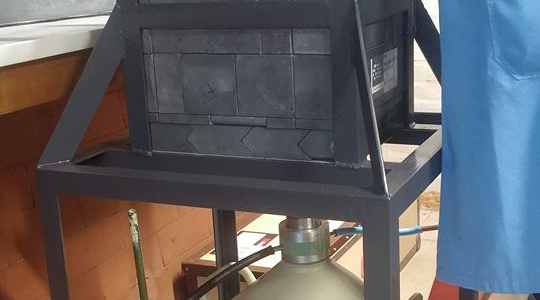
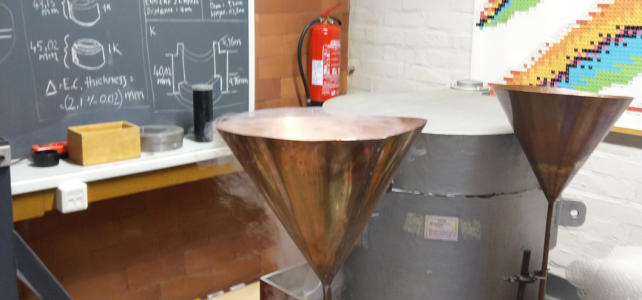
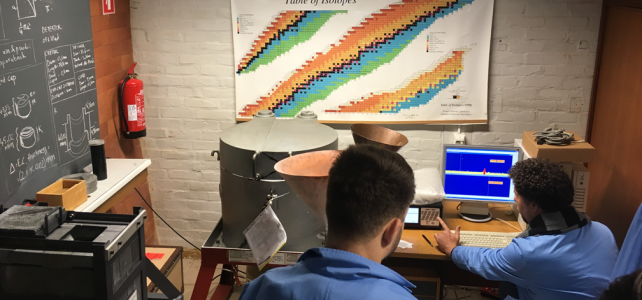
The purpose of the exercise is to measure the activity of radon and radon progeny in an indoor environment. Radon is one of the products of the 238U decay chain and it is the only one in gaseous form, and therefore the only one that can escape the out of the Earth’s crust. Radon may represent a significant contribution to natural radiation exposure, especially in karstic terrain (for which Slovenia is renowned), and after smoking, is the second most important cause of lung cancer.
Outcome / What you will learn
Students will:
- discuss the formation of radon through radioactive decay and diffusion into the atmosphere;
- perform simple experiments to demonstrate the presence of radon by detection of alpha radiation;
- perform radon concentration measurements using the Kuznetz method, by filtering radon progeny from the air and subsequent gamma spectrometry measurement.
Execution
After a discussion on the formation of radon through radioactive decay and its diffusion into the atmosphere, students:
- capture radon progeny onto electrostatically charged balloons and measure the emitted alpha particles;
- perform radon concentration measurements using the Kuznetz method by:
- filtering radon progeny from the air onto filter paper using a vacuum cleaner,
- gamma spectrometry measurements of the filter paper,
- analysis of the recorded gamma spectrum,
- determination of the radon concentration from the measured radon progeny activities.
Purpose of experiment
The water activation experiment serves as a demonstration of the creation of radioactive isotopes from nuclear reactions with fast neutrons in pure water. The main reaction product, N-16, is important from the radiation protection standpoint, as it emits energetic and highly penetrating gamma rays, in water-cooled fission and fusion devices. Conversely, measurements of the activities of the product radioactive isotopes represent an independent method of monitoring of the reactor power, leak detection, etc.
Outcome / What you will learn
Students will:
- observe methods for measuring of the activation of the primary water;
- measure the activity of primary water as a function of the reactor power.
Execution
- set up of the experiment on the reactor platform (water activation loop, lead shielding, detectors);
- discussion on the detectors;
- detector energy calibration using radioactive calibration sources;
- measurements of the activity of individual nuclides and the total dose rate as a function of reactor power;
- discussion of the results.